
Living with a Fila
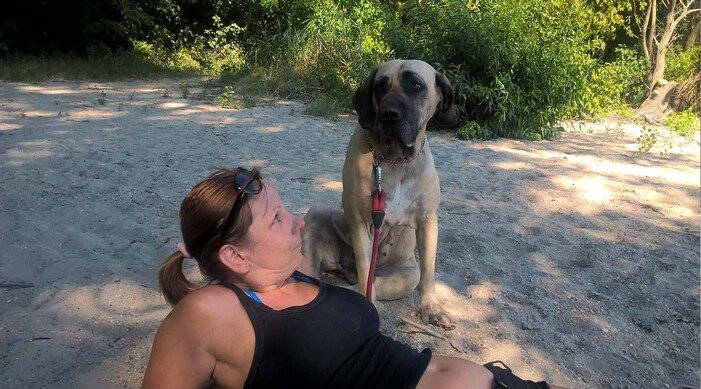
Whether it lives in a flat, a house with a garden or on a farm is not the most important question. What matters most is being close to its owner, sharing in everyday family life and having a consistent, safe environment.
Space alone is not decisive
The Fila is a large, powerful dog with a natural guarding instinct. It does not need elaborate coat care or constant sporting activity, but it does need companionship, attention and responsible care.
With more than twenty years of experience, I can say that the Fila can adapt to many different environments if it feels that it belongs to someone. A large garden alone will not make it happy. No amount of space or expensive equipment can replace a close relationship with its owner.
In a flat
With the right conditions, it can be settled and content in a flat, provided it has regular walks and lives close to its family.
In a home with a garden
A garden is a great advantage, but it does not replace time together, walks, upbringing or experience of the world outside.
On a farm
A spacious setting is beneficial if it is safe and the dog remains part of the human household.
“A Fila needs more than space. Above all, it needs its own person.”
Companionship rather than confinement
More than a possession kept in a kennel
The Fila finds prolonged separation from its owner difficult. Short periods of safe separation may, of course, be necessary, so it is important that, from puppyhood, it learns to accept a kennel, a separate room or its own resting place calmly.
Temporary separation is not the same as permanent kennel confinement. If the dog spends most of its days alone, away from the family, it may become unhappy, and its behaviour may also become less predictable and harder to manage.
Being close to the family does not mean that it must follow its owner everywhere all the time. It must also learn to spend time alone, accept calm separation and rest in its own place.
Large size, effortless movement
The Fila’s powerful build comes with surprising agility. In the video below, a Fila clears a high fence with ease — a clear reminder that large size does not mean cumbersome movement. This ability must be taken into account when designing secure fencing.
Outdoors or indoors?
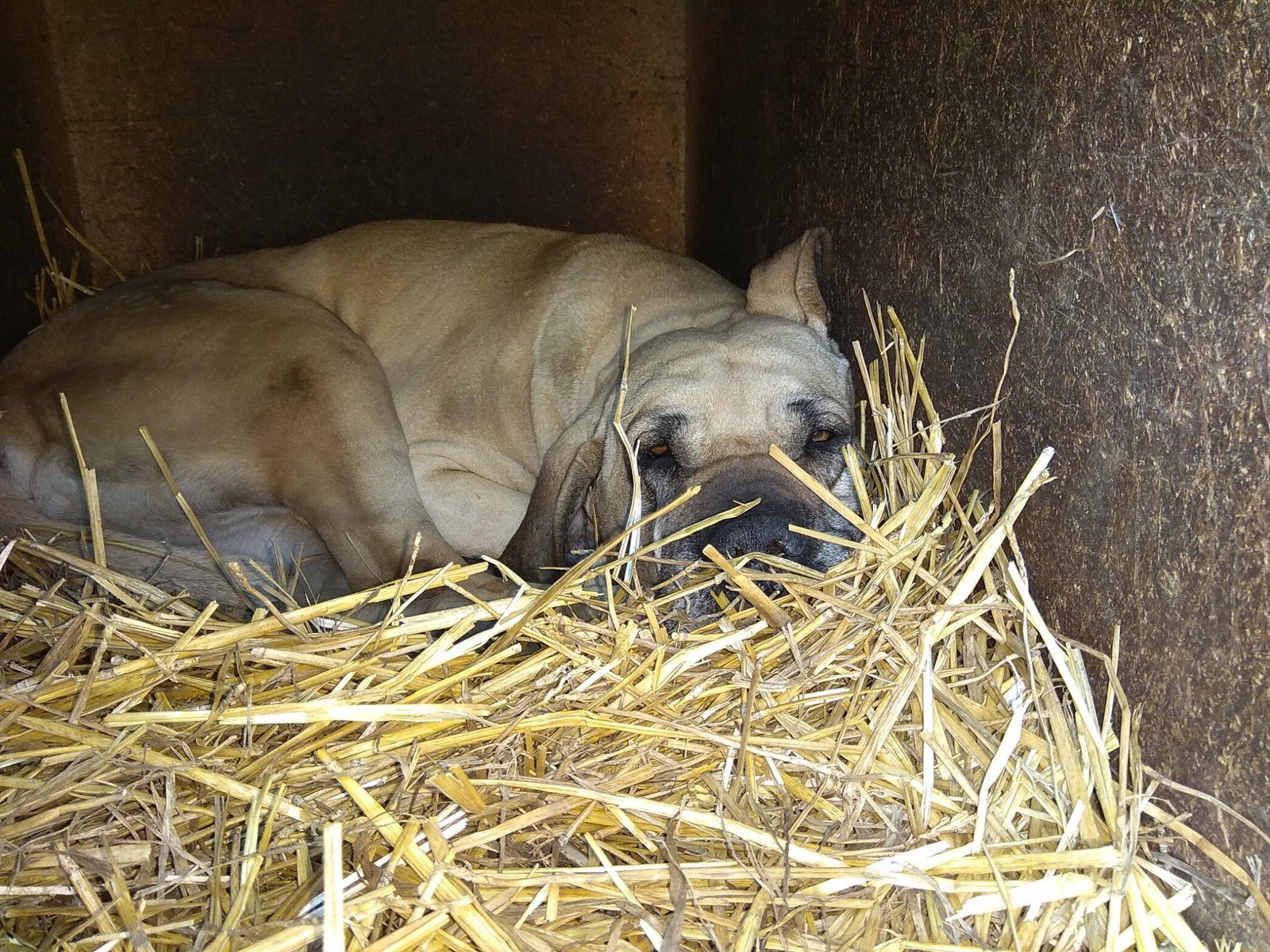
The Fila enjoys being outside, watching its territory and keeping track of events around it. It still needs a dry, draught-free, comfortable resting place sheltered from the weather.
Its short coat generally makes it less tolerant of cold than breeds with longer or double coats. If it spends a great deal of time in the garden, it needs a properly insulated kennel suited to its size, or a frost-free indoor space, in winter.
For my own dogs, dry straw has worked well as winter bedding. It provides a warm bed that they can shape to suit themselves, but it needs regular checking and replacement: it breaks down, can absorb moisture and is often pushed out of the kennel by the dog.
The bed should not remain damp or hard. Because of the dog’s size and the pressure on certain areas, calluses can develop on the elbows and elsewhere, particularly when it lies on concrete or other hard surfaces.
Coat care and basic grooming
The Fila’s short coat is easy to care for. Occasional brushing or the use of a rubber hound mitt is generally enough. More frequent grooming during shedding periods can reduce the amount of loose hair. Bathing is needed only when necessary.
Ears and mouth
The drop ears should be checked regularly, but healthy ears do not need unnecessarily frequent cleaning or harsh products. The teeth and mouth should not be overlooked either.
Paws and nails
Keep an eye on nail length, the paws and the pads. Overgrown nails can affect movement and how weight is borne through the limbs.
Skin and pressure points
The skin, folds, elbows and other pressure points should be checked regularly. Discharge, odour, redness or pain calls for a veterinary examination.
The growing puppy
A Fila puppy develops into a large dog in a short time. During this period, the aim is steady development, rather than the fastest possible growth.
A puppy must not be kept overweight. Excess weight places unnecessary strain on the developing joints and skeleton. It is better for the puppy to be lean, well muscled and agile than impressively heavy.
A complete food formulated for large-breed puppies is a sensible choice. Calcium, vitamins or other supplements should not be added automatically to a properly formulated diet.
Joint supplements or other dietary supplements are best discussed with a vet who knows the dog’s diet, development and condition. Not every puppy needs the same support.
How much exercise does a Fila need?
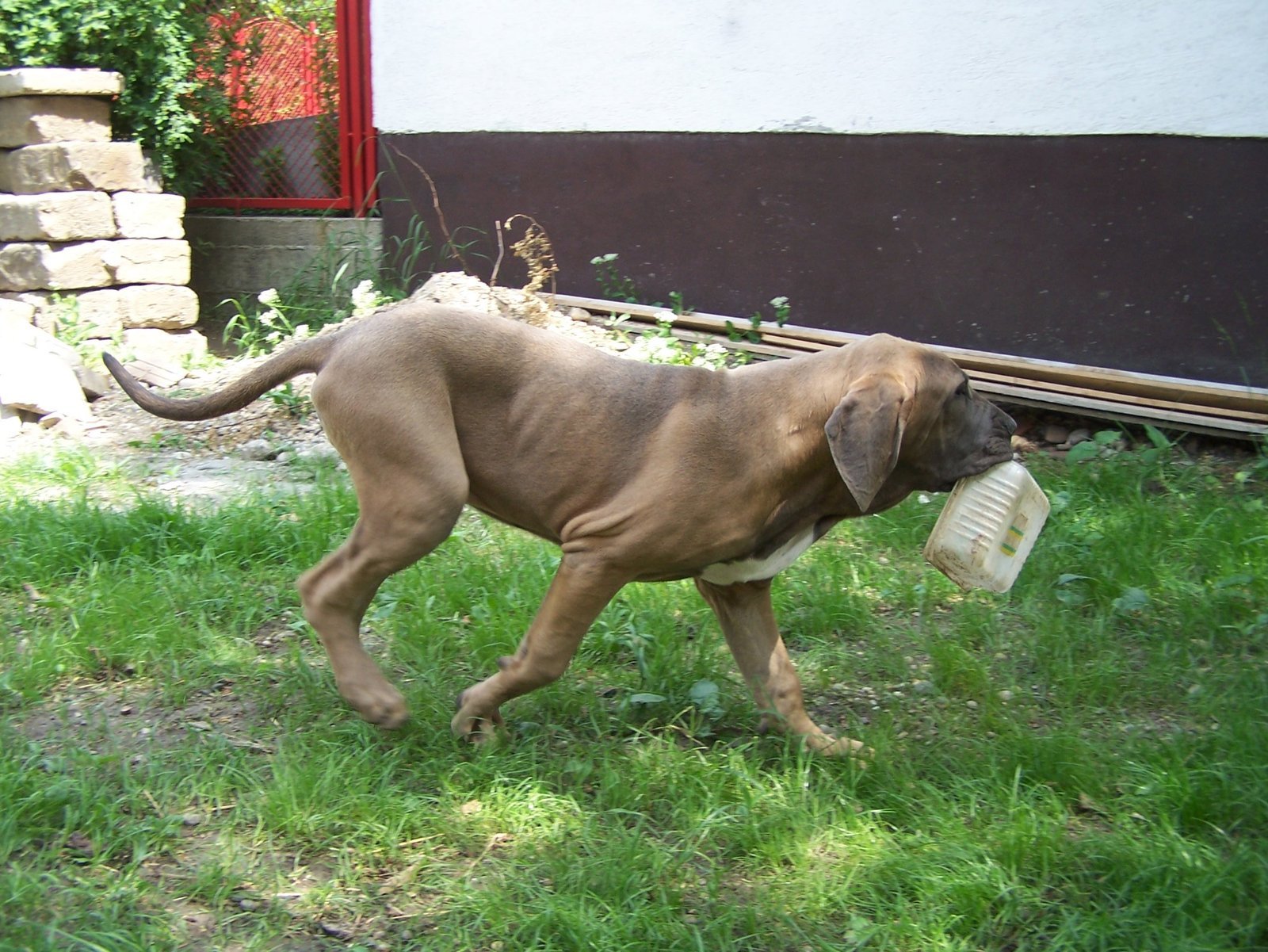
Exercise is essential for the proper development of muscles, coordination, bones and the nervous system. This does not mean forced exertion.
An adult Fila is not usually a hyperactive dog. It does not need to run all day, but simply being in the garden is not enough. It needs walks together, new experiences, opportunities to sniff and tasks that involve working with its owner.
Good choices
- free movement in a secure area;
- shorter, varied walks;
- natural ground;
- sniffing and exploring;
- age-appropriate play;
- basic obedience exercises.
What to avoid
- long runs alongside a bicycle;
- regular high jumping;
- repeated strenuous exertion;
- slippery floors;
- regular stair climbing in puppyhood;
- repeated jumping down from high surfaces.
Feeding and a healthy body weight
Feeding a Fila is not about one particular method or brand. The chosen diet should be complete, safely formulated and suited to the dog’s age, activity and health.
A healthy body weight matters more than making the dog look as large and heavy as possible. Excess weight increases strain on the joints, makes movement harder and can further reduce quality of life in old age.
Portions should be adjusted to the dog’s actual body condition, rather than solely according to the table on the packaging.
Gastric dilatation and volvulus
Gastric dilatation and volvulus — commonly abbreviated to GDV — is a rapidly developing, immediately life-threatening condition.
It is more common in large, deep-chested dogs, so every Fila owner needs to recognise the warning signs.
If there is a family history or another risk factor, it is worth discussing preventive stomach fixation, known as prophylactic gastropexy, with a vet. This does not prevent the stomach from dilating, but it can greatly reduce the risk of it twisting.
In my own experience, I have also seen stress and changes in digestive health as important circumstances in some cases. These are personal observations, however, rather than proven, independent causes. GDV cannot be attributed to a single factor.
The senior Fila
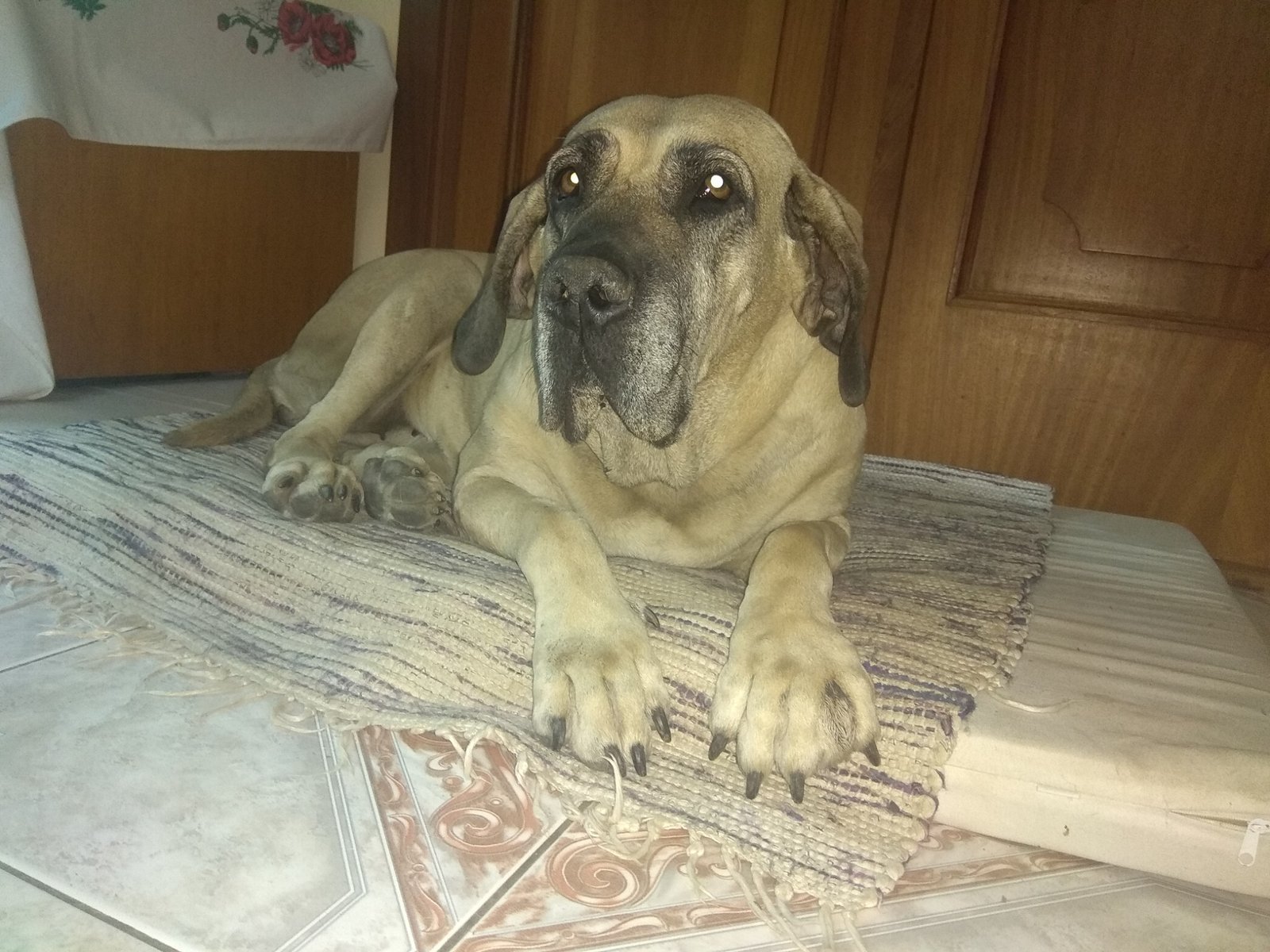
An ageing Fila generally needs more comfort and attention. It may find the cold harder to tolerate, rise more slowly, become stiffer in its movement and need more rest. A healthy body weight is especially important at this stage.
A soft, dry, draught-free bed, covering slippery surfaces, shorter but regular walks, gentle maintenance of muscle strength and early recognition of pain or changes in movement can all help.
A dog being old does not mean that every pain or difficulty moving is inevitable and untreatable. Timely pain relief, rehabilitation or other targeted treatment can make a substantial difference to its quality of life.
A lifelong responsibility
The Fila can be a wonderful companion and a dependable guardian, but it should only be chosen if we can care for it throughout its life.
Rehoming an adult Fila is particularly difficult. It forms strong bonds, may not readily accept strangers, and its size, strength and temperament mean that suitable new homes are few.