
The temperament of the Fila Brasileiro
The Fila’s character sets it sharply apart from most other breeds. Its loyalty to its owner is legendary. With strangers, it is reserved and watchful, and at times more forceful in rejecting their approach.
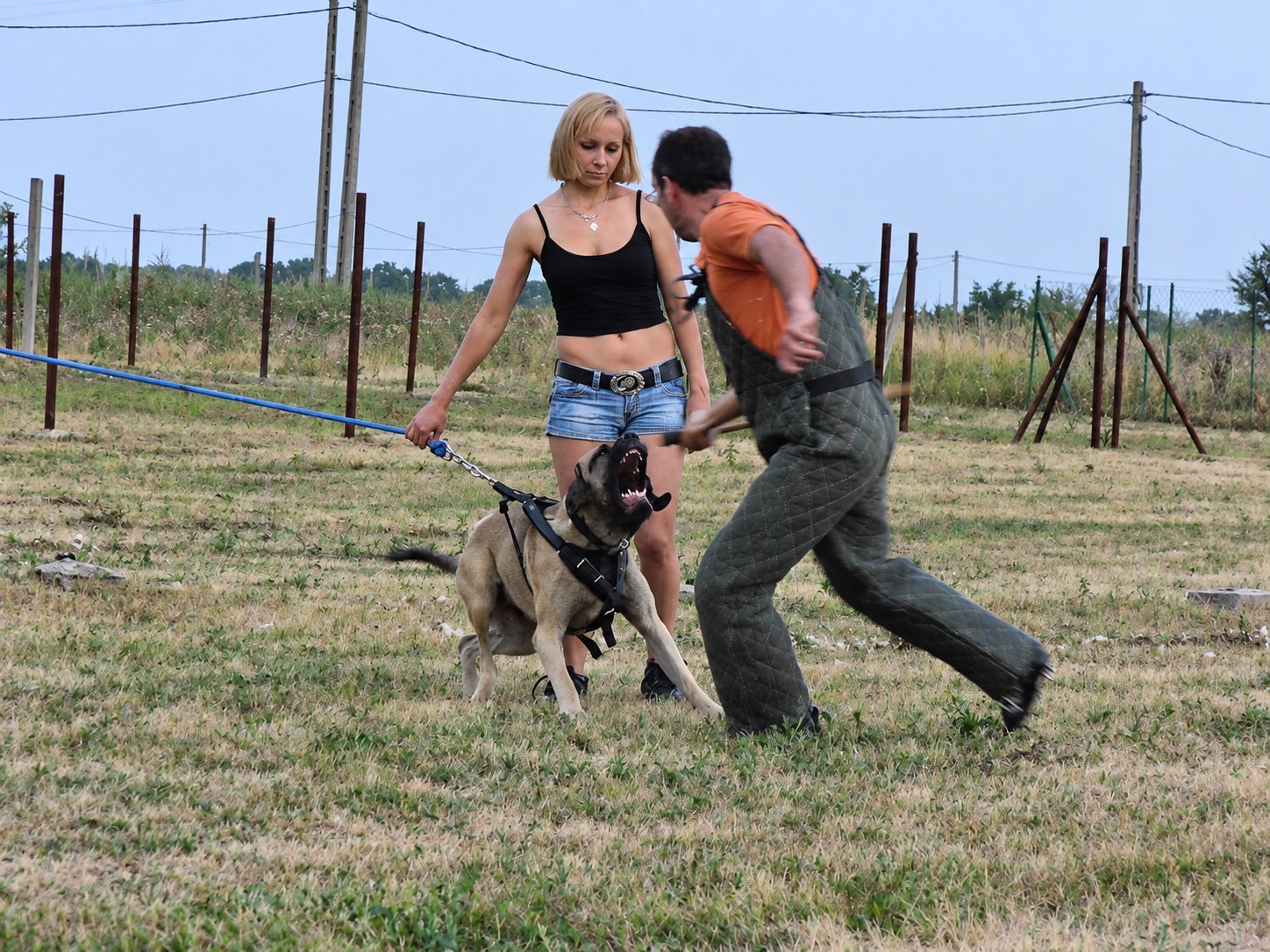
This is not an easy dog, or a breed for everyone. Yet this extraordinary character is precisely why those who have truly come to know the Fila can form such a deep bond with it.
Its highly developed protective instinct makes it an excellent guardian. Courage, determination, legendary loyalty to its owner and a natural aversion to strangers together create a character that makes the Fila Brasileiro unmistakable.
The FCI and CAFIB
The FCI and CAFIB take markedly different approaches to assessing temperament.
The CAFIB breed standard states that, because of its temperament, a Fila will not allow a judge — a stranger — to touch it at a show. If the dog responds to the judge’s approach by attacking, CAFIB does not regard this as a fault, but as an expression of its temperament.
The current FCI standard regards reserve towards strangers as natural, particularly on the dog’s own territory, but requires the Fila to remain under control and manageable, including in the show ring. Aggressive or excessively shy behaviour is a disqualifying fault under the FCI system.
It is hardly surprising that this difference divides Fila enthusiasts into two camps, particularly in Brazil. Those who place the preservation of the original temperament above all else often believe that the Fila has no place at a conventional conformation show where a stranger acting as judge must touch and examine it.
The CAFIB temperament test
At CAFIB events, dogs over twelve months of age undergo a separate assessment of temperament and mental stability. According to the breed standard, the dog’s attack should be directed upwards on a diagonal, in front of the handler, without showing dependence on the handler. An inappropriate response may lead to disqualification under the CAFIB system.
An organised temperament test does not represent an everyday situation. It is a breed-specific assessment conducted under defined rules.
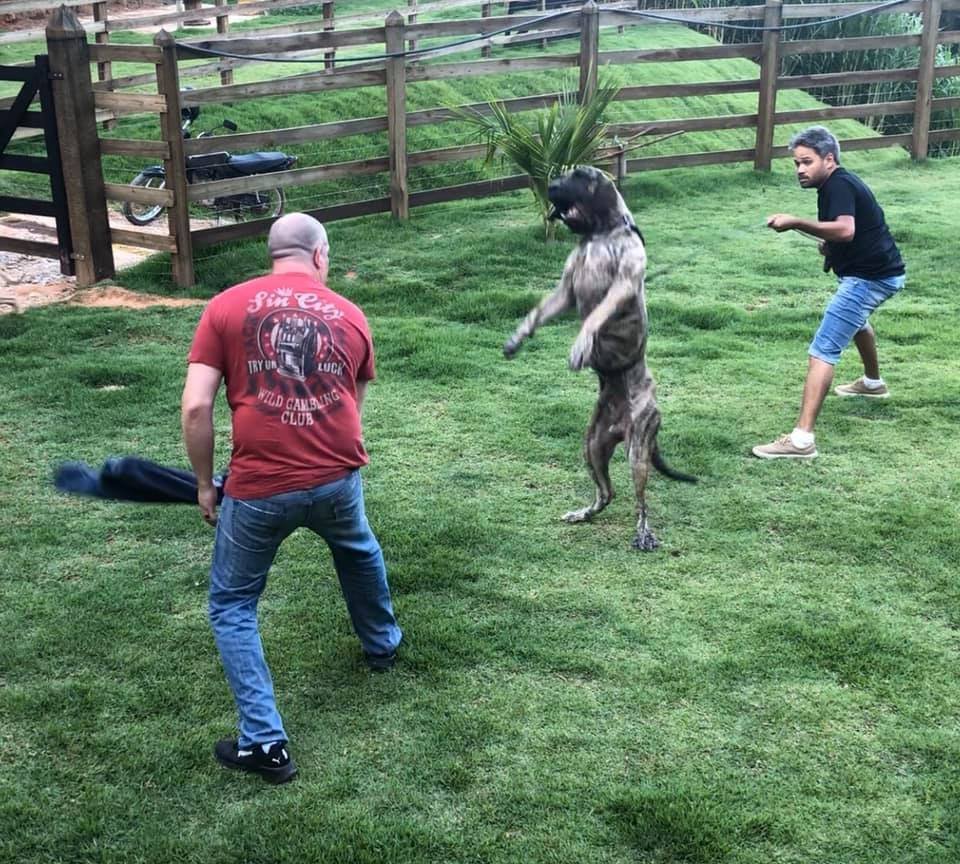
A private temperament test
This photograph shows an informal test carried out privately. It was not taken during an organised CAFIB temperament test and must not be interpreted as an official assessment.
The scene nevertheless illustrates why the Fila’s response must always be observed under controlled conditions, with respect for the dog’s strength and natural temperament.
Devoted to its owner, rejecting strangers
It accepts the people it comes to know as a puppy and regards as part of its family. As for its owner, it is — to put it rather extravagantly — in love.
It is reserved, mistrustful and rejecting, and in some situations may respond forcefully. This instinctive aversion is more than simply learned behaviour.
What does ojeriza mean?
Ojeriza is not simply aggression, nor is it learned behaviour. It is far more complex: an instinctive aversion to strangers whose intensity can vary from dog to dog and from situation to situation.
Even at two or three months of age, a Fila puppy often has no wish to make friends with strangers. It may withdraw, hide under a bush, avoid being touched or express its displeasure by growling.
It is important, of course, to distinguish early reserve from persistent, generalised fear. In puppyhood, rejection of strangers often takes the form of withdrawal. With desirable development, however, this becomes confident, determined and stable adult behaviour, rather than panicked flight.
The Fila is — to put it rather extravagantly — in love with its owner. With strangers, however, it feels no need to make friends or invite familiarity.
A memorable puppy visit
On one occasion, an older couple came to see my puppies. They told me they had owned Filas before and now wanted another.
I was pleased to meet them. I thought there would be little need to explain the breed, since they said they knew it well.
Because of the adult dogs’ behaviour towards strangers, I could not simply let the couple in among the puppies. Instead, I brought out the three-month-old puppy they might have chosen.
When the puppy saw the two strangers, it pulled free of my arms and ran away. I brought it back triumphantly, expecting admiration: here was a puppy with true Fila character, already unwilling to make friends with strangers at such a young age.
To my surprise, their response was exactly the opposite.
They were utterly taken aback. They said none of their previous Filas had behaved like this. They did not like it and did not want such a fearful puppy.
My explanations afterwards were in vain. At this age, a Fila puppy’s rejection of strangers often still appears as withdrawal. This may be one of the first, still developing expressions of the later ojeriza — provided the puppy has a stable temperament, can settle again and gradually grows in confidence.
In the end, it was better that things turned out this way. Knowing the breed’s name is not enough to understand the Fila’s distinctive nature. It must be understood and accepted. A dog with truly typical Fila temperament is not suited to someone who is really looking for a giant dog that befriends everyone and is easy to manage.
The adult Fila
By adulthood, the Fila’s character is more clearly expressed. Its behaviour can range from calmly tolerating a stranger’s presence to forcefully rejecting it. Even the same dog may respond differently to different people and situations.
Filas are individuals. Each is different. They cannot be fitted into a simple set of rules prescribing exactly how they should behave in every circumstance.
What we can expect is a determined response to a genuine threat, and at least reserve or rejection when a stranger approaches in a friendly way.
How forcefully — and sometimes with how much “arrogance” — the dog responds to a particular approach depends on its own character and assessment of the situation. Our upbringing naturally influences this too: the Fila is deeply attached to its owner and wants to please.
It needs a relationship, not harshness
Because of its close bond with its owner, the Fila usually understands and learns the rules quickly. It must therefore never be treated with unnecessary harshness.
Excessive severity from its owner can affect it very deeply emotionally. It is unnecessary, too. The Fila learns readily and quickly when guided by someone who understands the basics of raising a dog, is consistent and predictable, and does not try to dominate it through force.
Trust is the foundation of raising a Fila. We must show it which behaviours are acceptable and which are not, without constantly trying to prove our position as “pack leader”.
It is not plotting how to gain the upper hand over its owner. Its aim is much simpler and more straightforward: it wants to be close.
The Fila with a stable temperament
A Fila with a truly sound temperament can move confidently among people and other dogs even with little experience. This does not, of course, mean that appropriate socialisation is unnecessary. Good genetic foundations and thoughtful upbringing together produce the desired result.
Unfamiliar noises or unusual circumstances do not easily unsettle it. It watches and shows interest, without tucking its tail between its legs or wanting to escape from the world.
In a large crowd, it may be able to shut out its surroundings altogether and focus only on its owner, if asked to do so.
This behaviour can change to the opposite when we walk somewhere where there are normally no people. If someone appears in the distance, the Fila follows them with its gaze for a long time. It immediately regards the unexpected stranger as a situation requiring attention, and possibly a dangerous one, often responding with a growl, a change in posture or raised hackles.
This confident vigilance is quite different from an uncertain response rooted in fear. A young dog that is not yet fully confident in every situation may develop with appropriate experience. What is undesirable is a Fila that is constantly fearful, panics, tries to flee and feels fear more strongly than trust in its owner.
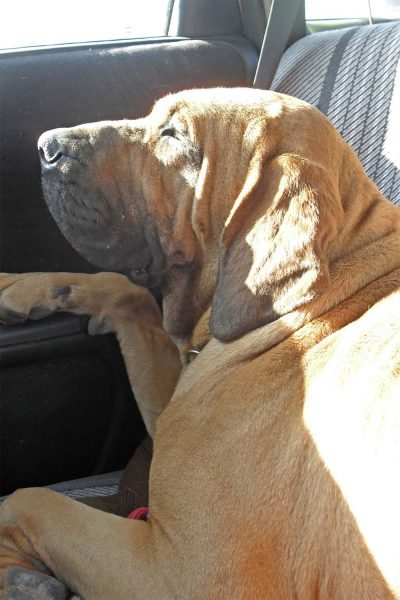
Following its owner anywhere
The Fila will follow its owner almost anywhere.
Often, even a completely unfamiliar situation or a first car journey causes little unease, as long as it can be with the person to whom it is attached.
Bahia, shown here, travelled in a car for the first time at three years of age. It was clear that being with her owner mattered more to her than the unfamiliar situation.
This bond is one of the Fila’s most beautiful qualities. Home is more than a house or a yard. Home is wherever its owner is.
As evening falls
The Fila’s mistrust and suspicion generally increase as daylight gives way to dusk. It becomes more watchful and, in many cases, more vocal, paying closer attention to its surroundings and every small change.
We may observe a similar change when a Fila accustomed to city noise and many people moves with us to a much quieter, more sparsely populated area. What blends into the everyday background in a city immediately gains significance in a quiet place.
A distant footstep, an unfamiliar sound or a person approaching alone may become something the dog considers important to investigate. This, too, shows how closely it watches for changes in its surroundings.
It simply wants to be near us
There is no need for a constant power struggle between a Fila and its owner. We must show it clearly what is right and what is not, but its fundamental aim is not to gain the upper hand over us.
It has one straightforward aim: to remain close to its owner.
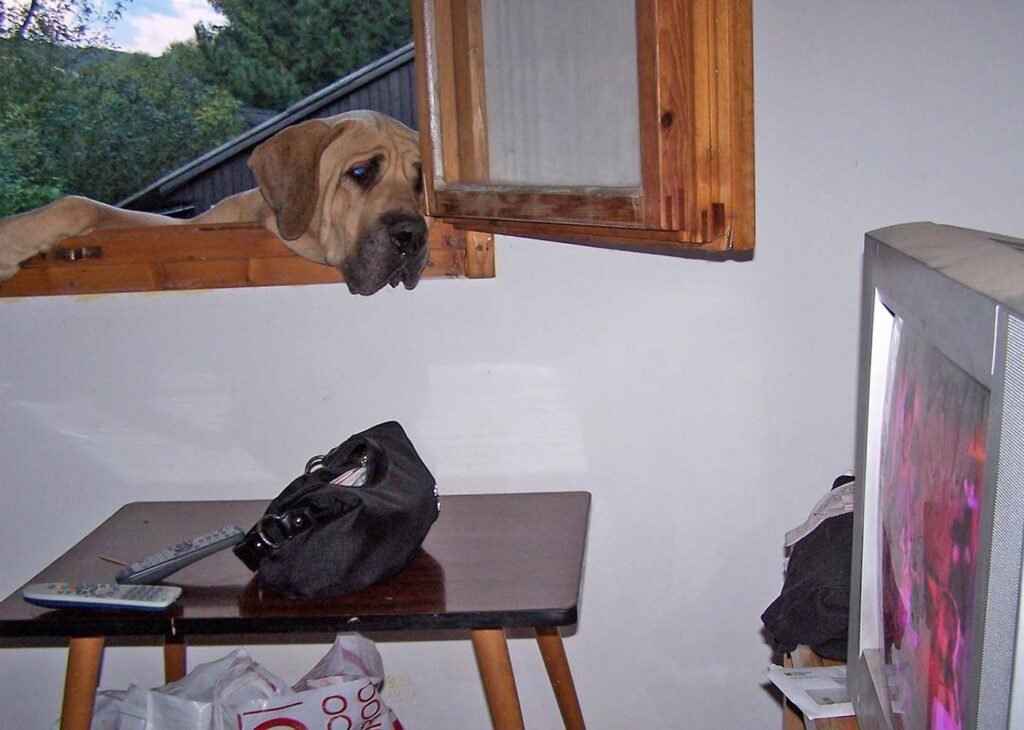
This can sometimes lead to rather distinctive situations — especially when it eventually discovers that a window is useful not only for looking out, but also for looking in.
And if the family is inside, perhaps with the television on as well, it naturally needs to know what is happening.
Children, visitors and family life
With children in its own family, the Fila can usually be affectionate, patient and exceptionally devoted. This is not necessarily true of children from outside the family.
To the dog, a visiting child is a stranger too. Running, shouting, waving arms or a playful disagreement with a child in its own family can easily create a situation that is misinterpreted.
We must therefore always exercise care. Interactions between a dog and a child must be supervised, and no dog should be expected to tolerate everything.
The Fila’s affection for its family does not remove the need for responsible decisions by its owner.
Not a breed for an isolated life
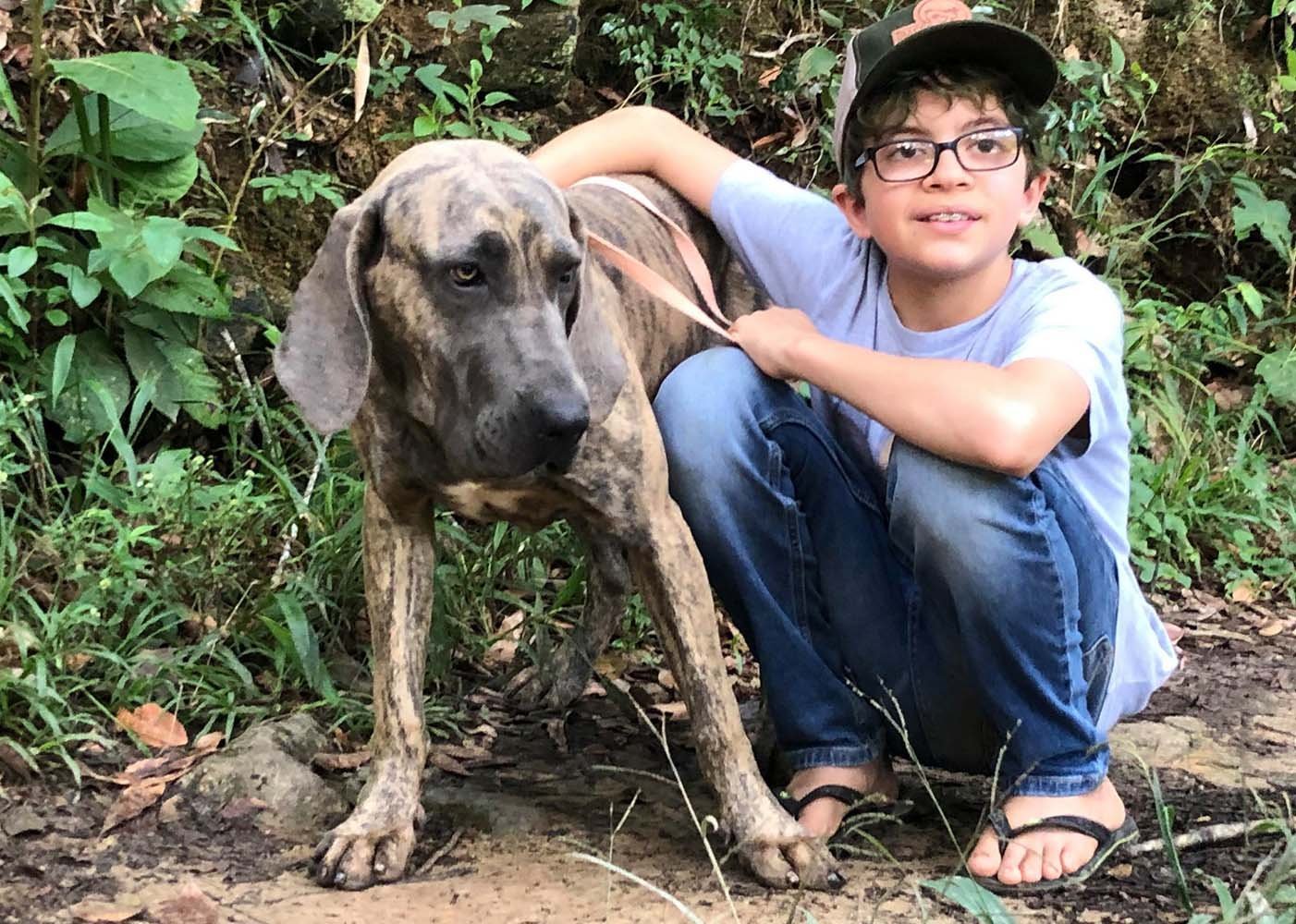
The Fila is not a breed suited to an isolated life. It needs a close relationship with its owner, regular care and the chance to be a real part of family life. Living at the far end of the garden, being fed and guarding the property is not enough.
It wants to see us. It wants to follow us. It wants to know where we are and what we are doing.
The Fila’s strength lies not only in its body or protective instinct. Its bond with its owner is equally powerful.
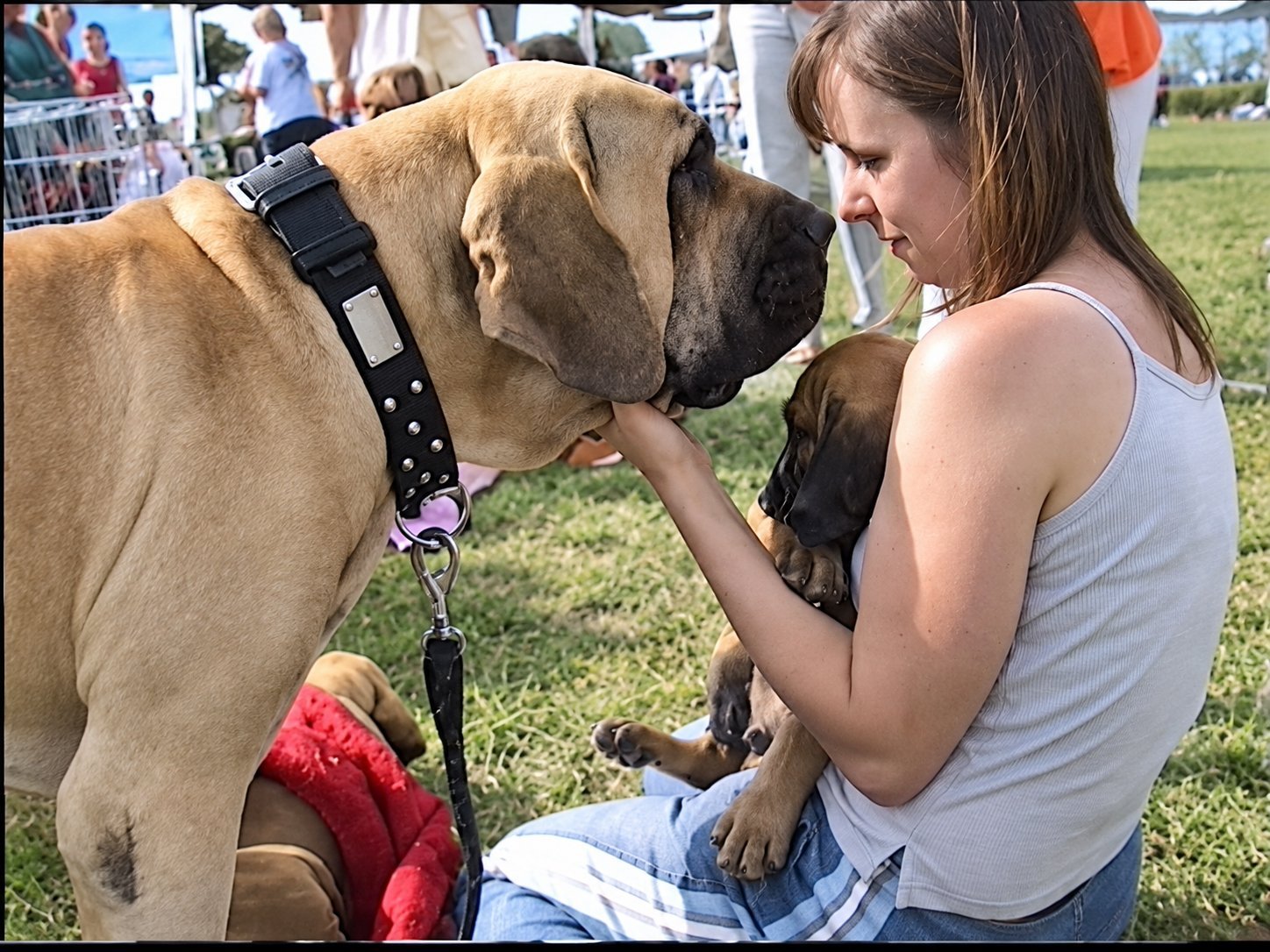
It rejects a stranger with the same uncompromising determination with which it gives its wholehearted devotion to those it regards as its own.
It is not a breed for everyone. It never will be. But for someone who understands its nature, respects its boundaries and can return this extraordinary attachment, the Fila can offer a depth and sincerity of companionship found in very few other breeds.