The Appearance of the Fila Brasileiro
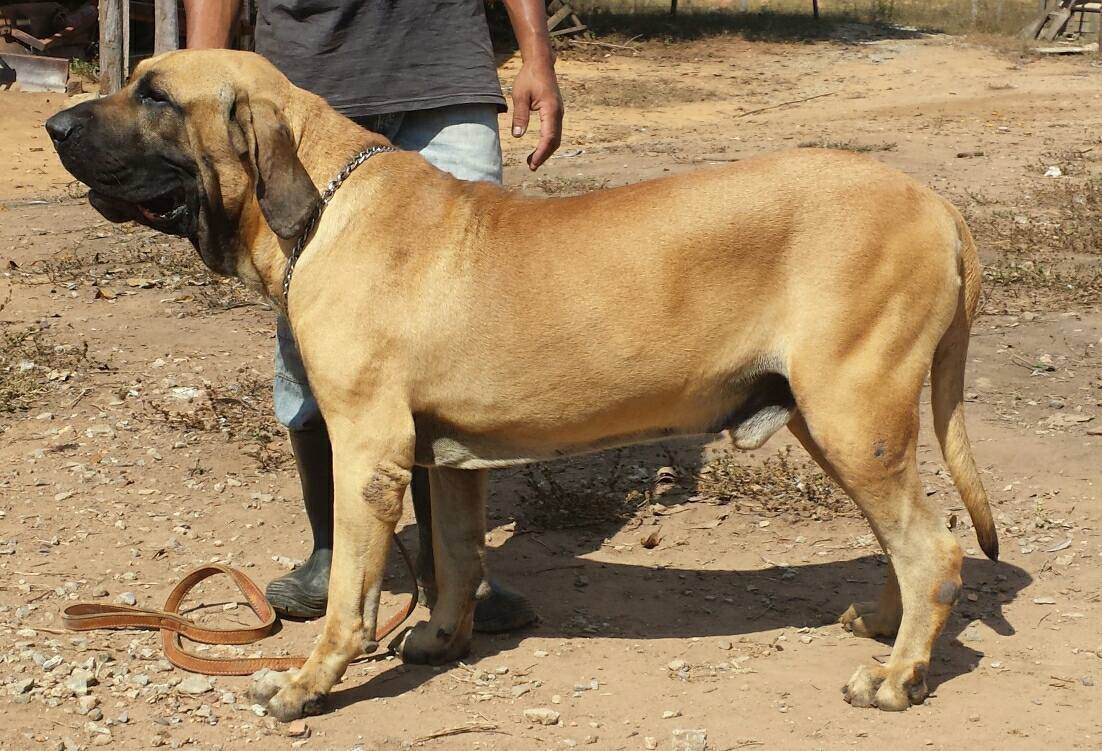
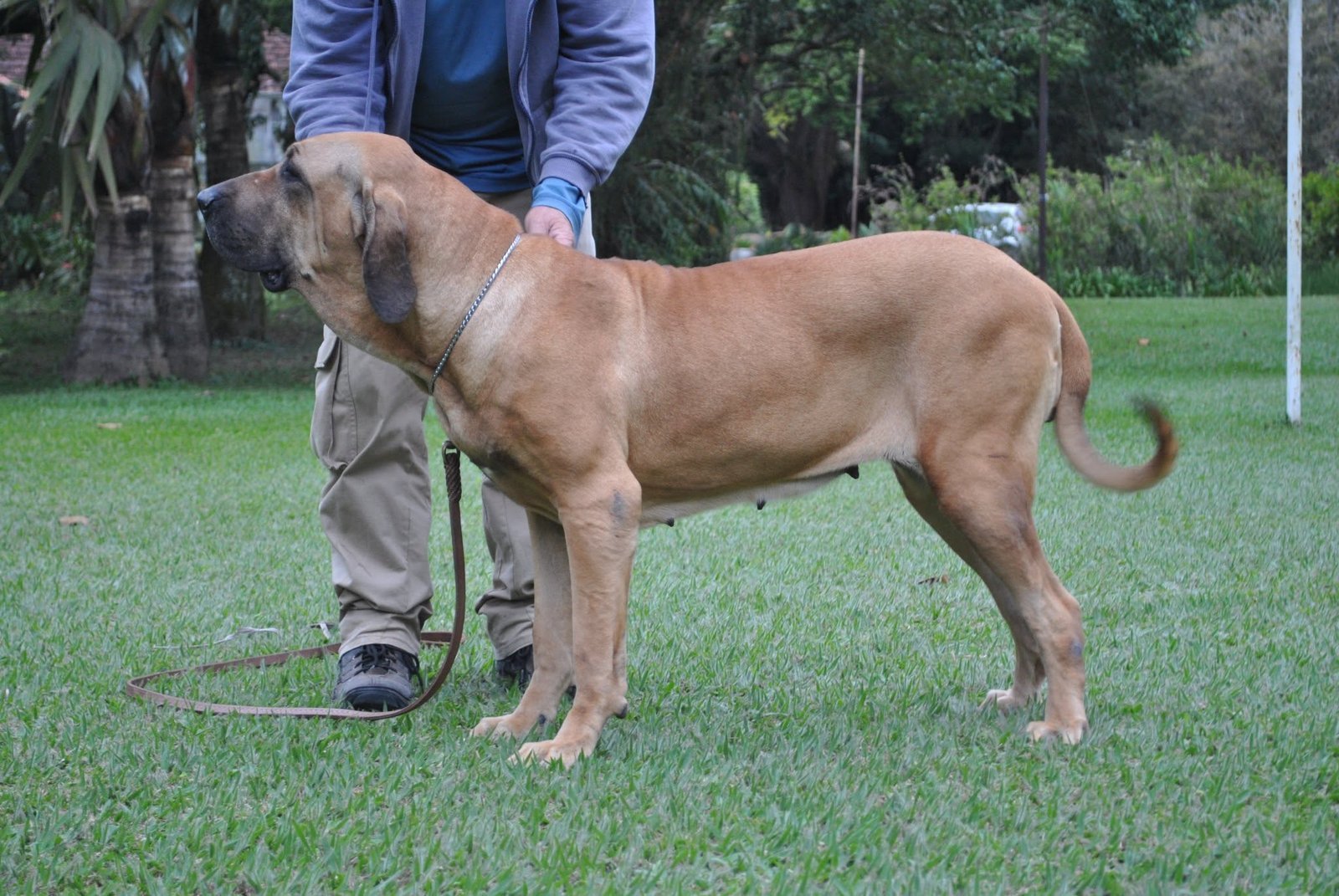
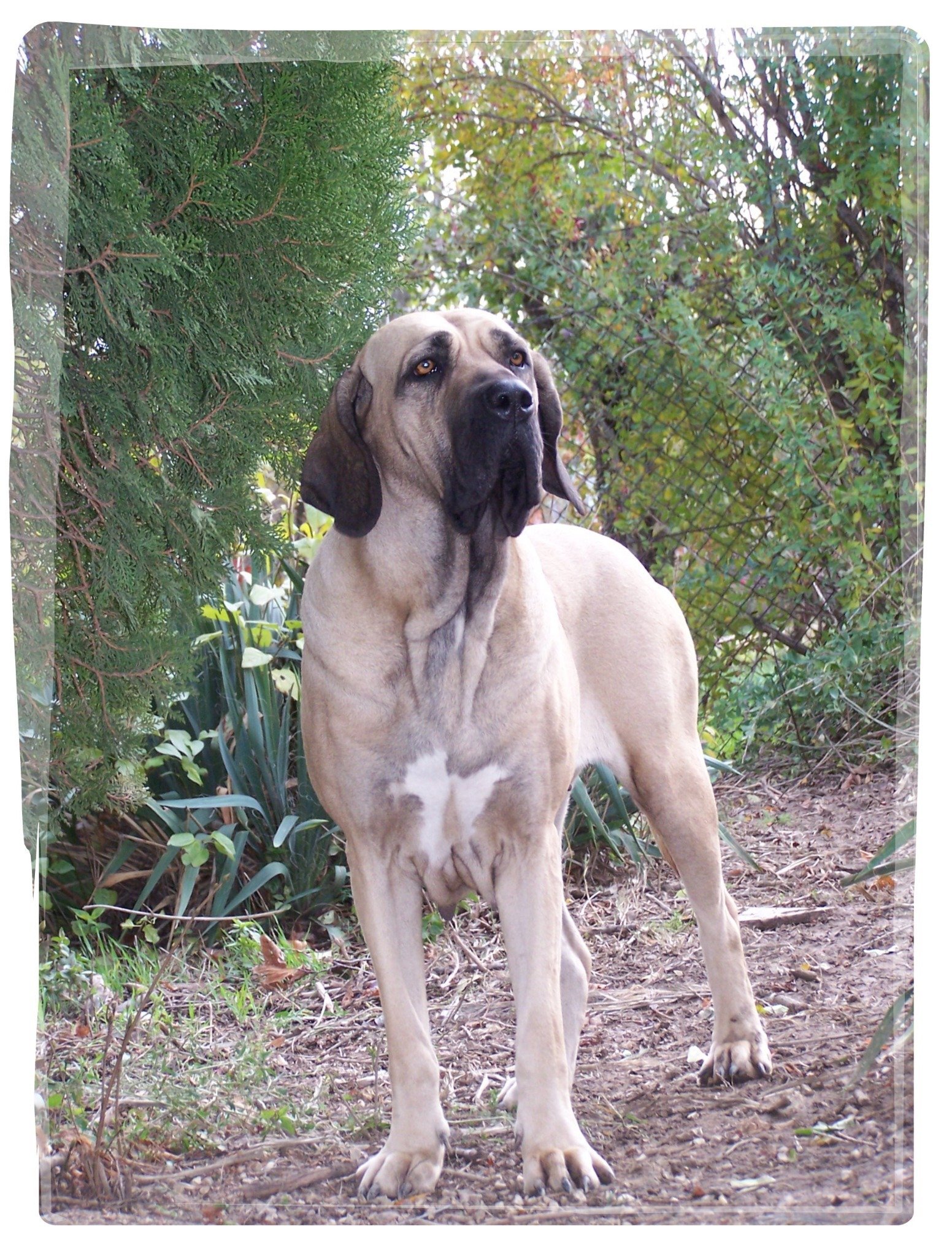
A large, powerful molossoid, yet never sluggish or cumbersome. True Fila type emerges from the combination of strength, harmony, loose skin and surprising agility.
Rather than repeating the points of the breed standards, this page shows how the individual features come together to form an unmistakable Fila.
Look at the whole dog first
Understanding the Fila’s appearance does not begin by examining the head, skin or body weight in isolation. Start with the overall impression: a large, rectangular dog with strong bone and a broad, deep body, combining a substantial build with flexibility and the ability to react quickly.
A male should be distinctly masculine and a female feminine, but neither should become coarse, exaggerated or lose the ability to function. A good Fila has presence without relying on sheer size or exaggeration to make an impression.
Substance
Strong bone and a deep body, without excessive weight.
Harmony
Every feature should be in balance with the others and with the dog as a whole.
Flexibility
The conformation should allow easy movement and rapid changes of direction.
Distinctive character
The head, topline, skin and movement together give the breed its character.
A good Fila is not defined by a single striking feature. The proportions and function of the whole dog must ring true.
Breed type is always expressed in the whole dog
Substantial, never cumbersome
The Fila is a typical molossoid: large, strongly boned, broad and deep. Its body is longer than its height at the withers, giving it a rectangular outline. This must not mean short legs, excessive width or body weight that hampers movement.
One of the breed’s distinctive qualities is the concentrated strength and agility it conveys despite its substantial size. Even standing still, the dog should look capable of setting off quickly, changing direction and moving efficiently over longer distances.
Males and females should be distinguishable at first glance
Clearly defined sexual dimorphism is an important breed characteristic. It is not simply a difference in size: the head, bone, body proportions and overall appearance also differ between males and females.
Large and heavy, yet proportionate
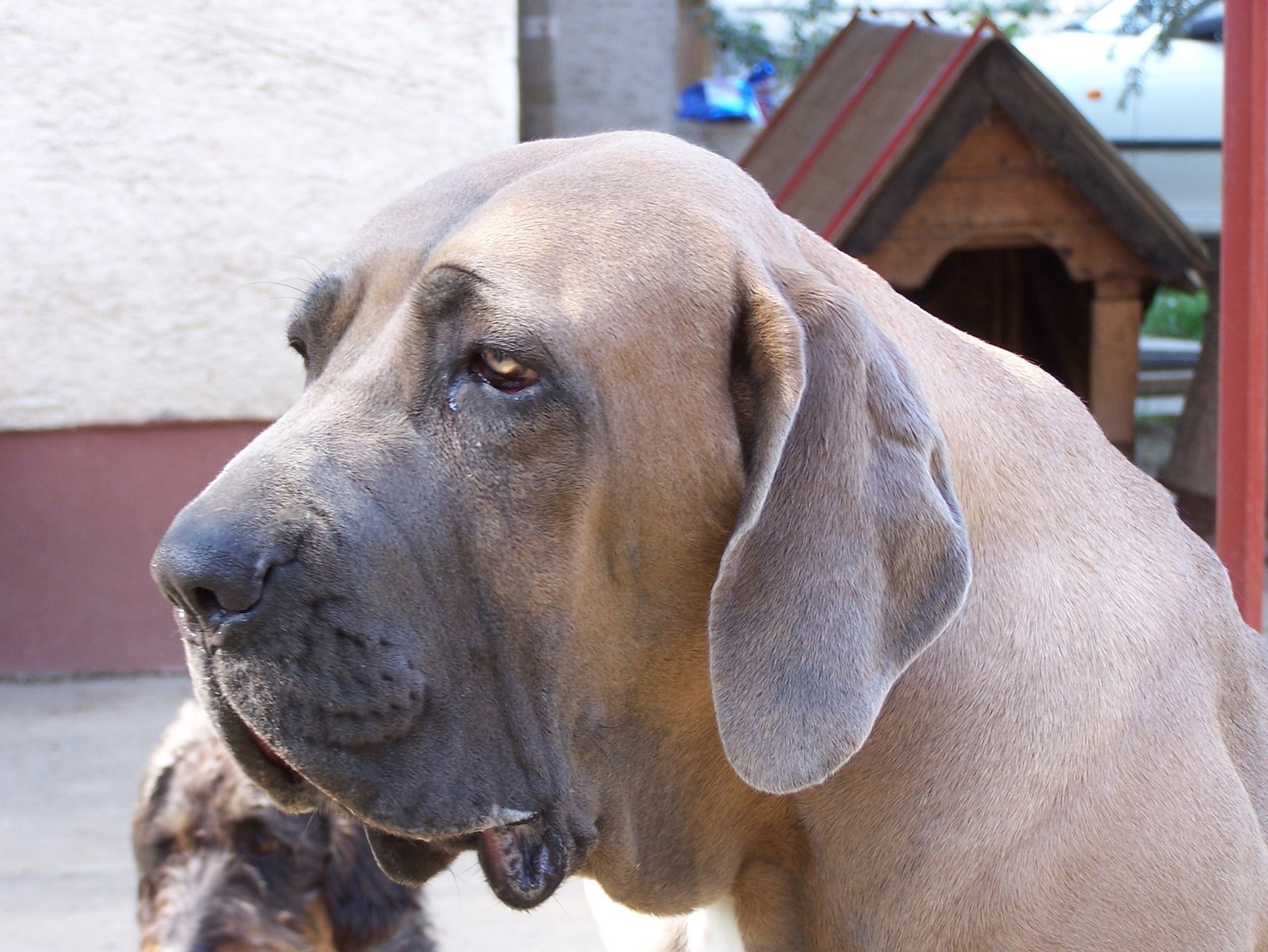
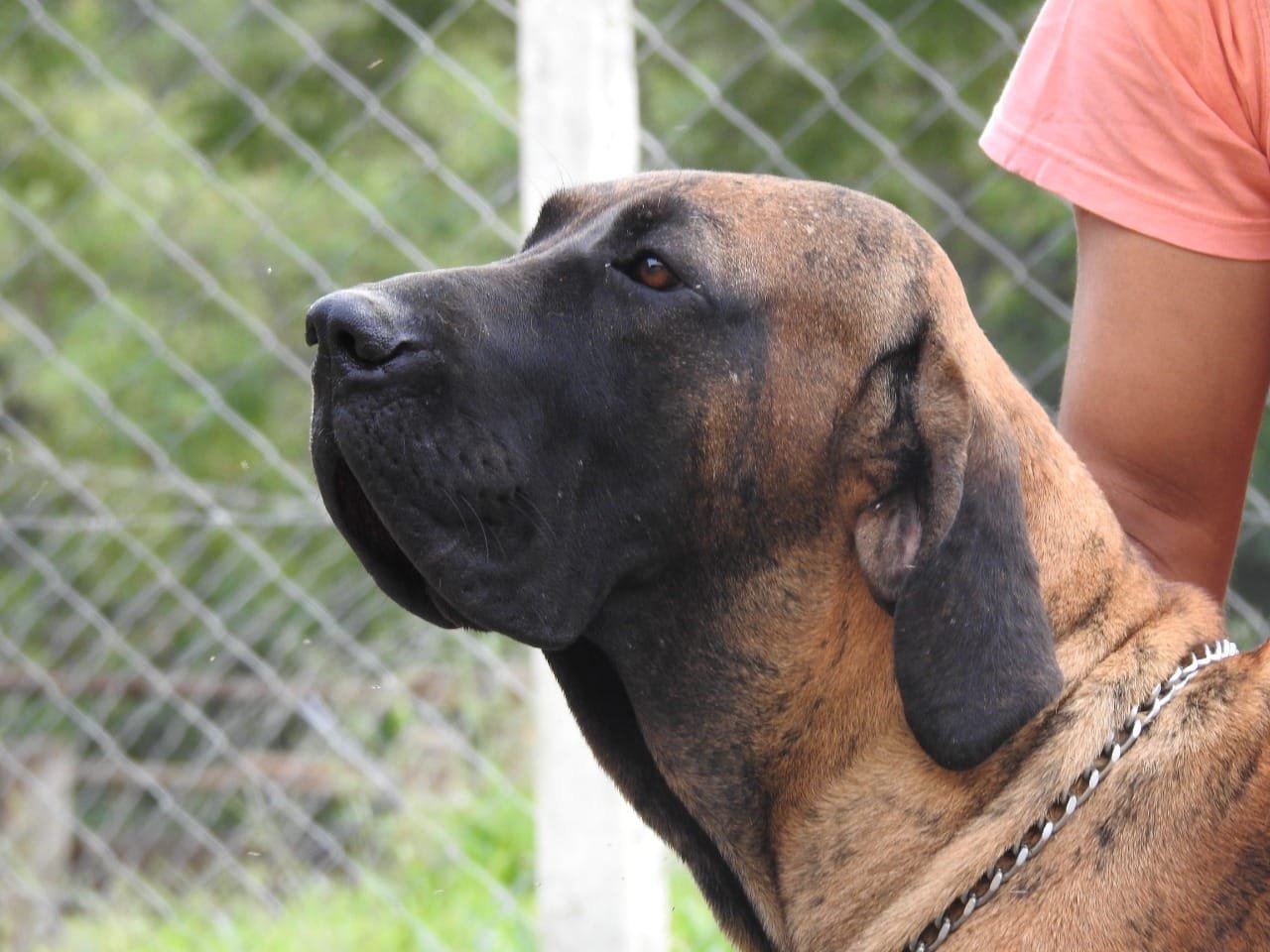
The Fila’s head is large, heavy and substantial, but always proportionate to the body. The skull is broad, the occiput pronounced and the stop slight. The muzzle is strong, broad and deep; the lips are well developed, with the upper lip curving over the lower.
The eyes are medium to large and set well apart. In many dogs, the loose skin and shape of the lower eyelids create a distinctive, melancholic expression at rest. When alert, the gaze becomes firm and penetrating.
Ears
Large, thick and pendant, set towards the back of the skull, with rounded tips. At rest, they may hang beside the cheeks or be carried as rose ears.
Nose and muzzle
The nose is black, with well-developed nostrils. The muzzle should not taper sharply or appear pointed.
Stop and forehead
The stop is slight in profile and barely visible from the front. The forehead should not be wrinkled at rest.
Expression
The shift between calm dignity and alert determination is one of the breed’s most beautiful qualities of expression.
Appearance is more than a head
There can be no Fila type without the distinctive head, but a large head alone does not make a dog a good Fila. The head must suit the dog’s body size, bone and sex.
Exaggeration is not a breed virtue
An overly short muzzle, a rounded skull, excessively deep wrinkles or a mouth that is constantly held open even at rest can alter the overall impression towards a different type and impair function.
The Fila’s silhouette is not level
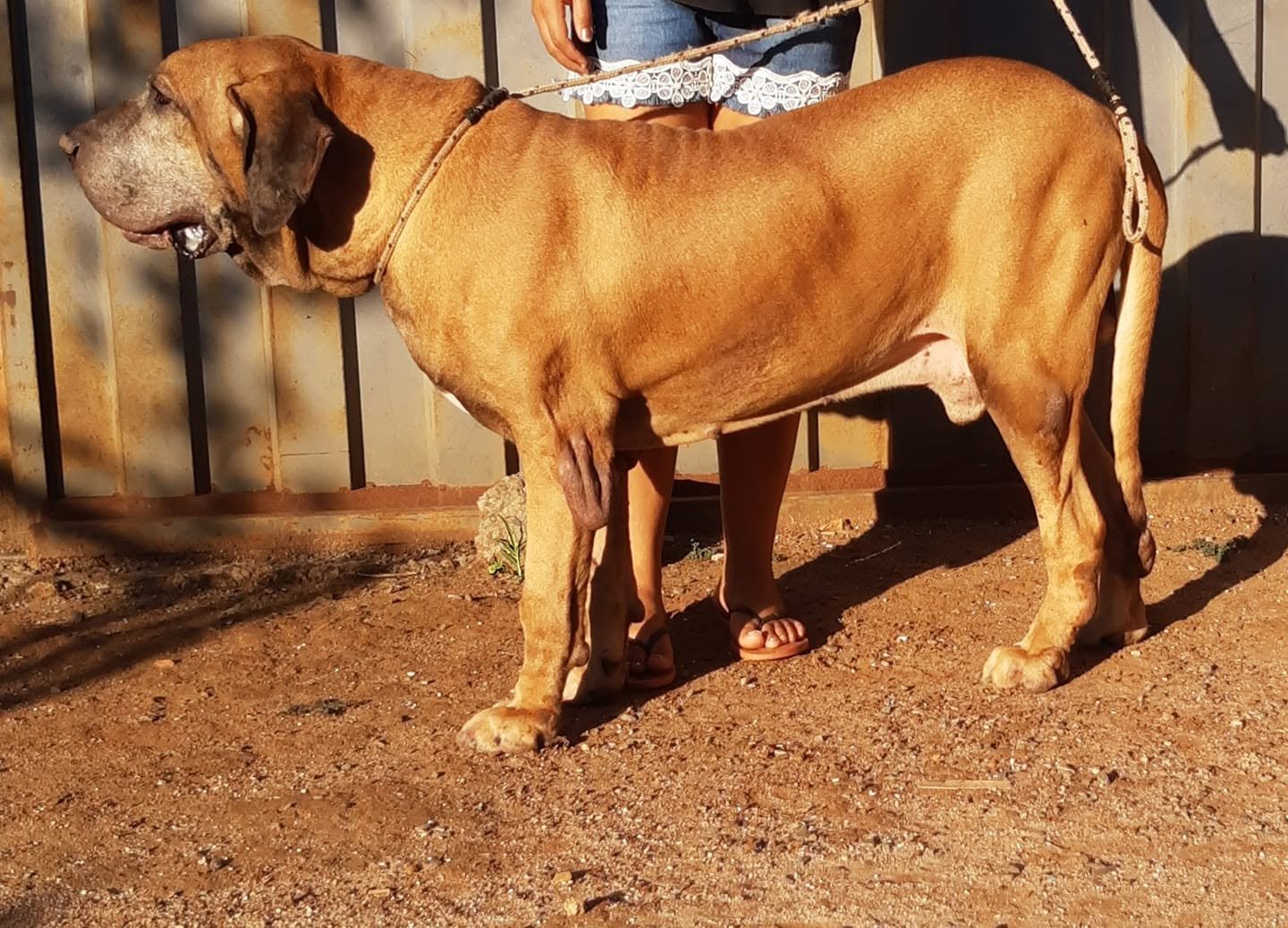
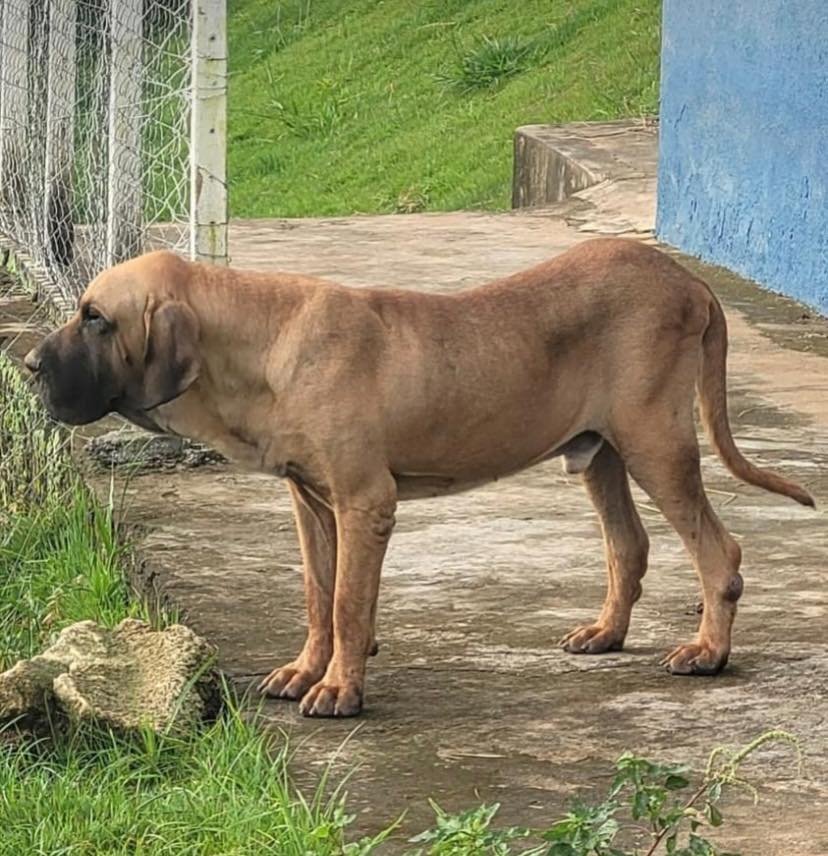
The body is strong, broad and deep. The thorax is longer than the abdominal section, the ribs are well sprung and the forechest pronounced. The withers are lower than the croup: after the withers, the topline rises gently towards the broad, long, slightly sloping croup.
This rising line is not a sway back, nor should it be a roach back. The body should not have a wasp waist; the abdomen is only slightly tucked up. The width and length of the croup are important for effective hindquarter movement.
Loose and thick, without excessive folds
Thick, loose, elastic skin is one of the Fila’s most important breed characteristics. It is especially noticeable at the neck, where it forms a pronounced dewlap; some dogs also have folds around the chest, abdomen, withers and shoulders.
Loose skin does not mean as many wrinkles as possible. At rest, the forehead is smooth. Excessive, heavy folds are undesirable when they alter the breed’s expression, restrict movement or contribute to health problems.
The coat is short, smooth and close-fitting. A good coat is straightforward to care for, but shedding, skin folds and pendant ears require regular attention.
The true test of conformation
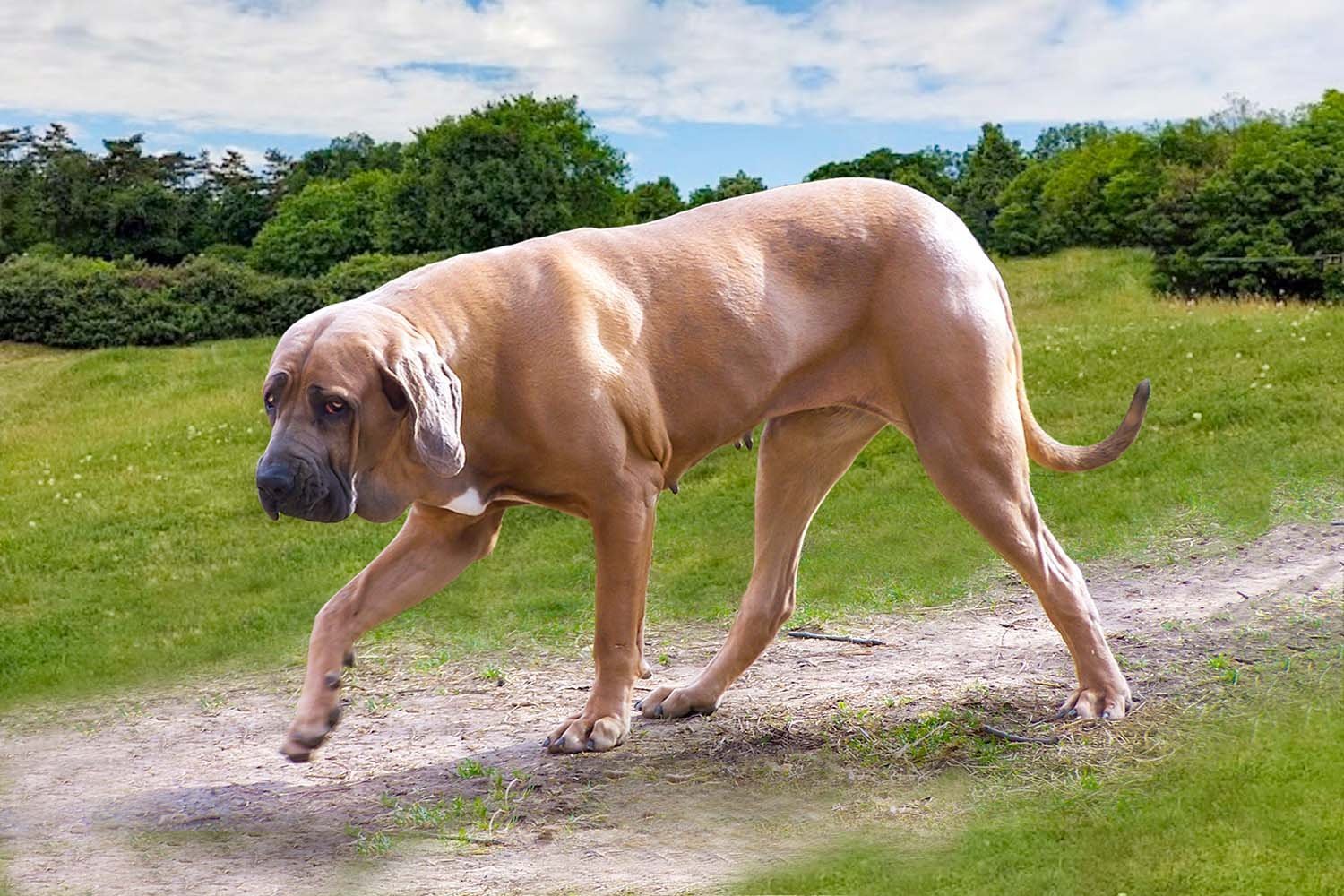
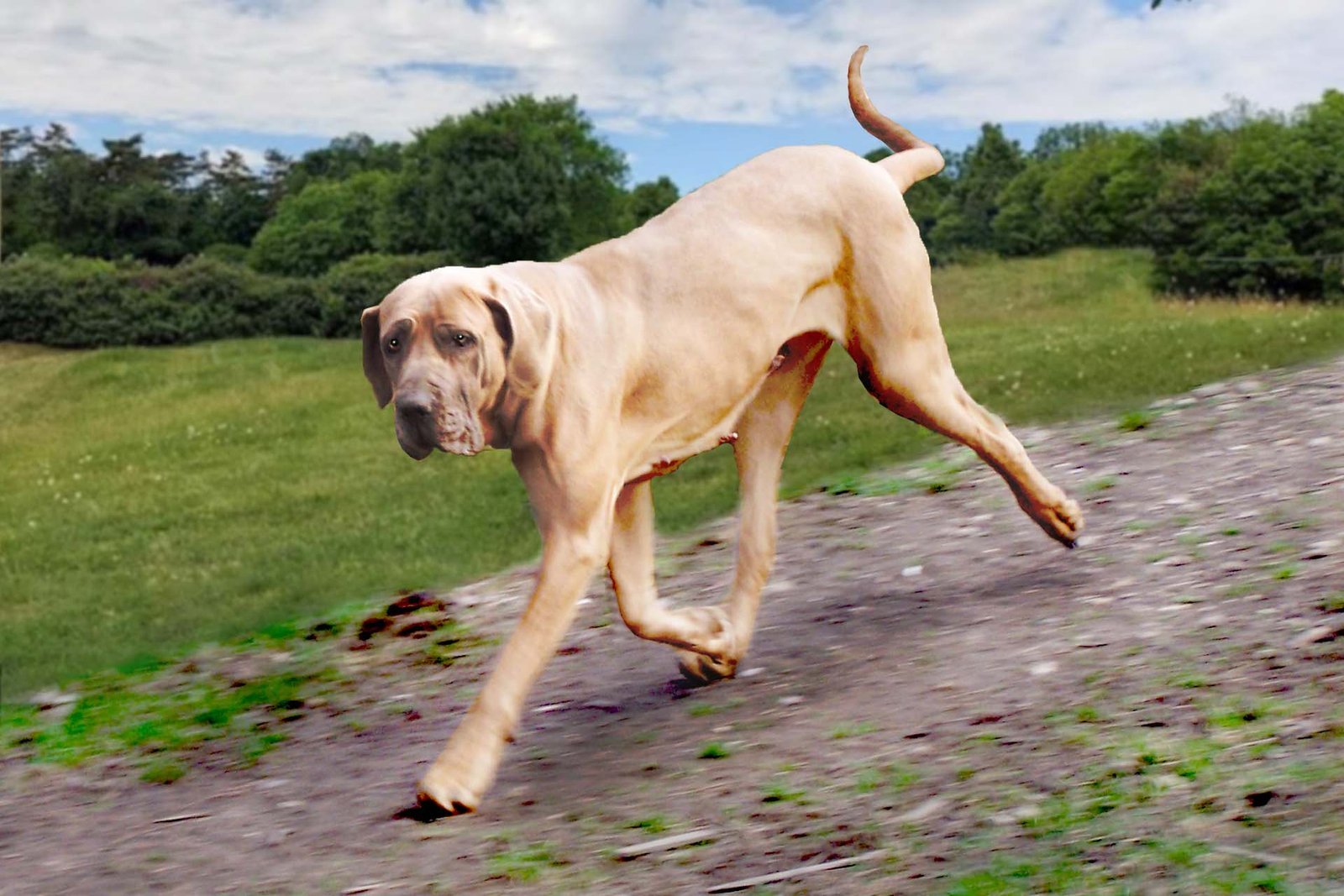
Correct conformation cannot be judged from a standing photograph alone. The Fila’s movement reveals whether strength, proportions and joint flexibility truly work together.
At a walk, the characteristic gait is a two-beat lateral pace, known as the “camel’s pace”: the legs on the same side move together, while the chest and croup gently rock. The trot should be easy, smooth and ground-covering; the gallop is surprisingly fast for a dog of this size.
Colour is striking, but type must come first
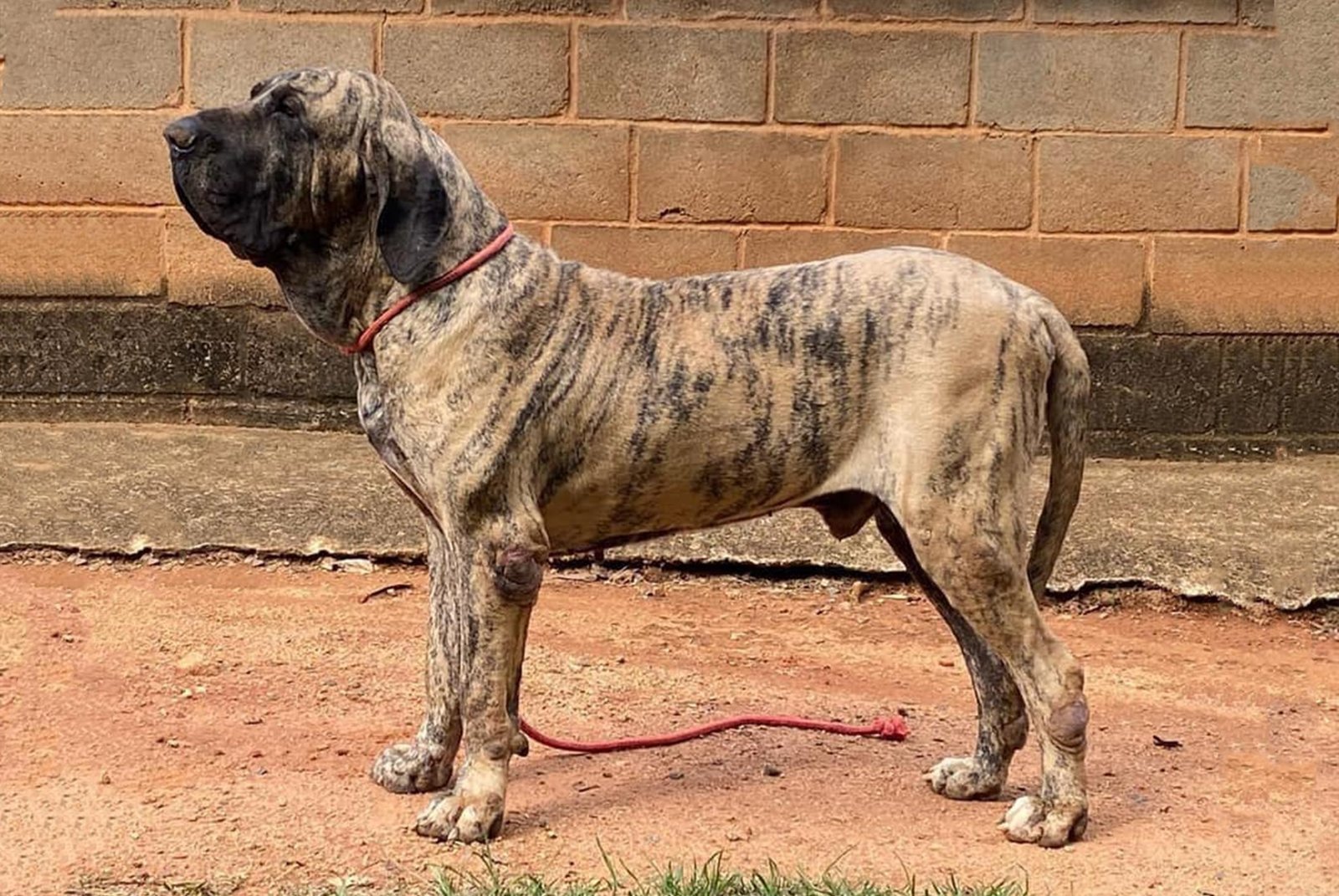
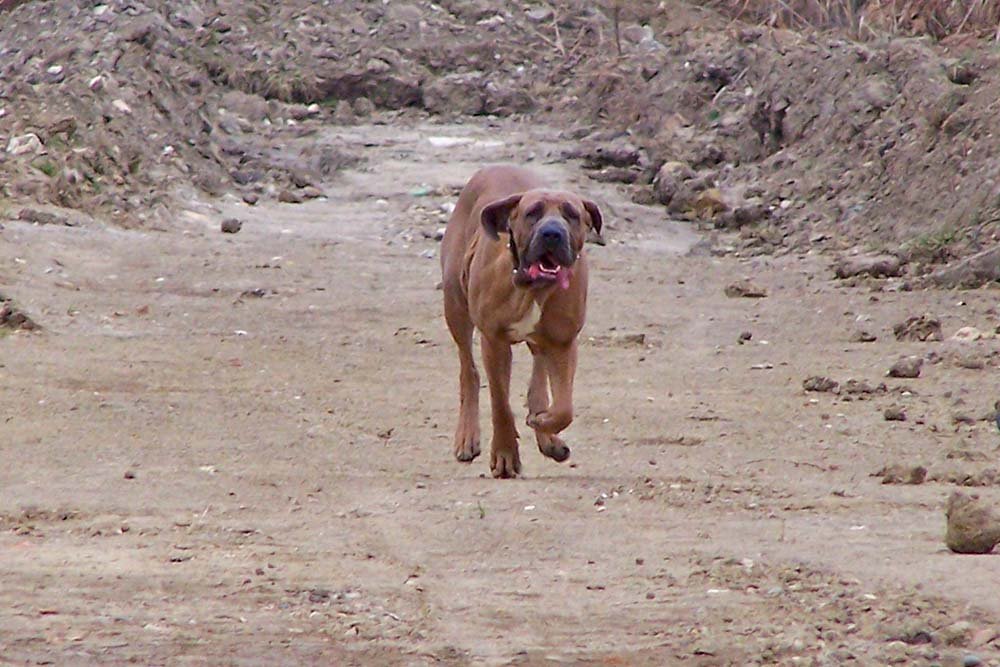
Filas occur in several base colours and brindle patterns, with or without a black mask. The FCI/CBKC and CAFIB standards differ significantly in their approach to colour, so the photographs will receive precise colour descriptions at a later stage.
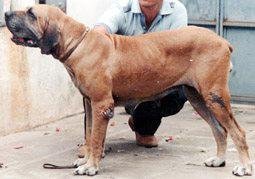
Red
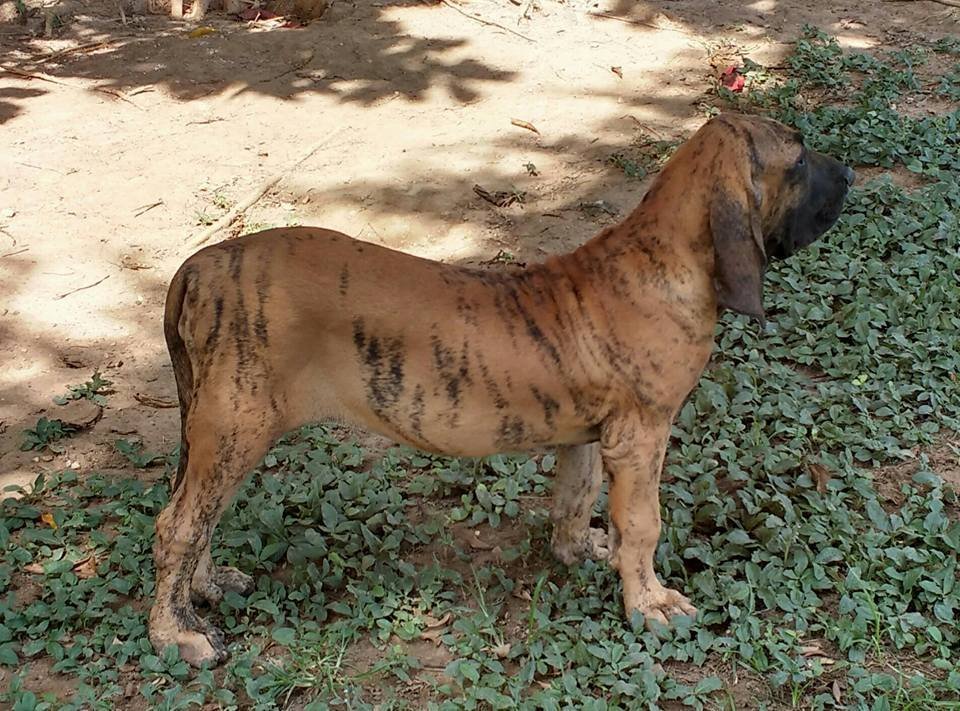
Brindle
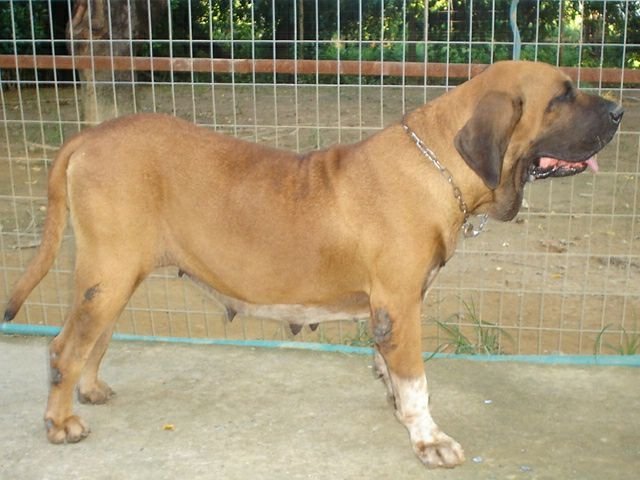
Red with white markings
Common exaggerations and misconceptions
A striking feature can quickly become popular, but it has value in breeding only if it does not compromise the dog’s health, movement or breed type.
Is bigger always better?
No. An oversized, overly heavy dog may lose the flexibility and speed that are central to the breed.
Does more skin mean better type?
No. Loose skin is essential, but excessive wrinkling cannot replace a correct head, body and movement.
Does a large head decide everything?
No. The head must be proportionate; a short, overly heavy head or one of a different type can detract from the overall impression.
Is a standing photograph enough?
No. The true quality of the limbs, topline and balance becomes fully apparent in motion.
What do I look for in a Fila?
More than twenty years with Filas have taught me that the most striking detail is rarely the most important. The dog must be seen as a whole: how it stands, how it moves, how it carries its body and how well it retains the particular balance that sets it apart from other molossoids.