
The History of the Fila Brasileiro
Its story did not begin with a modern breeding programme or a handful of clearly documented foundation dogs. The Fila took shape over a long period on Brazil’s rural estates and livestock farms.
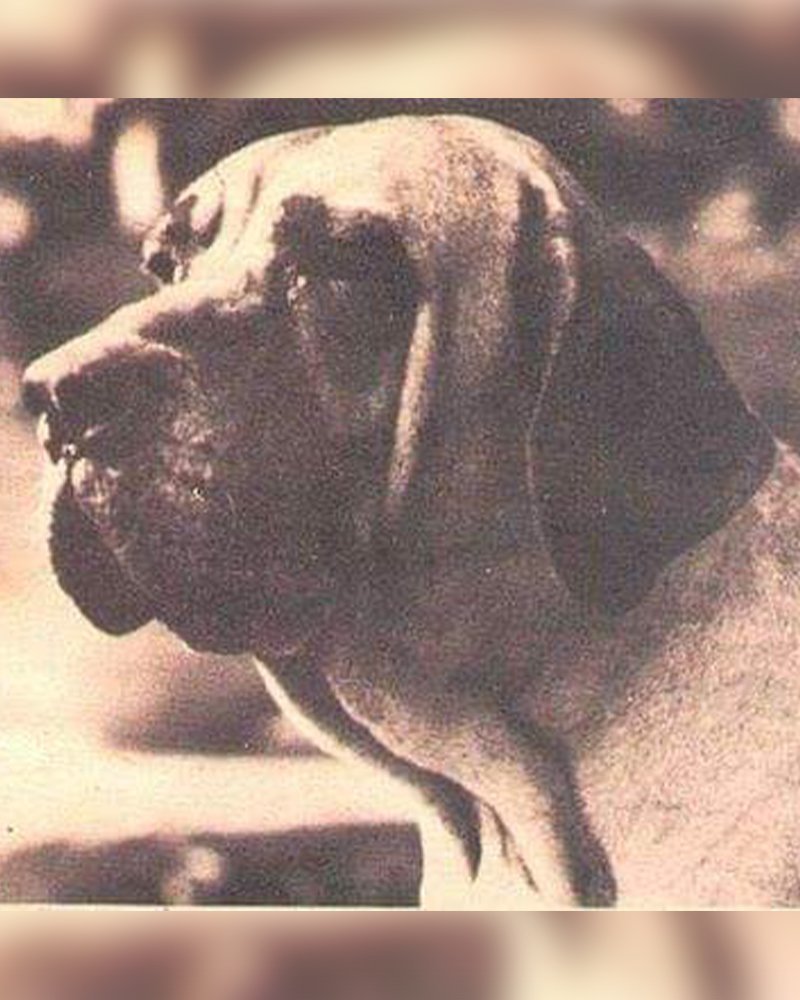
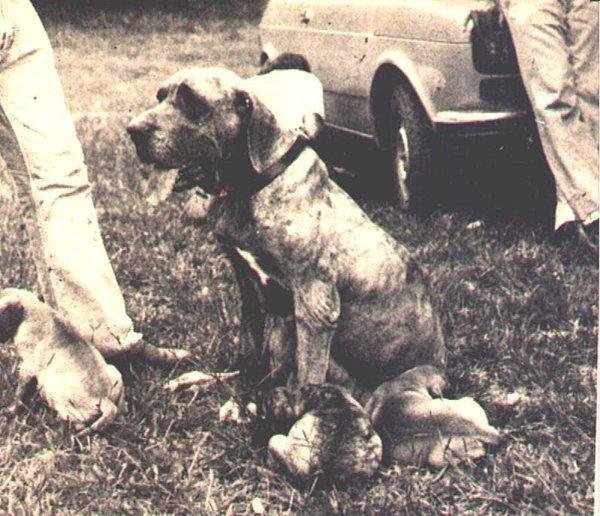
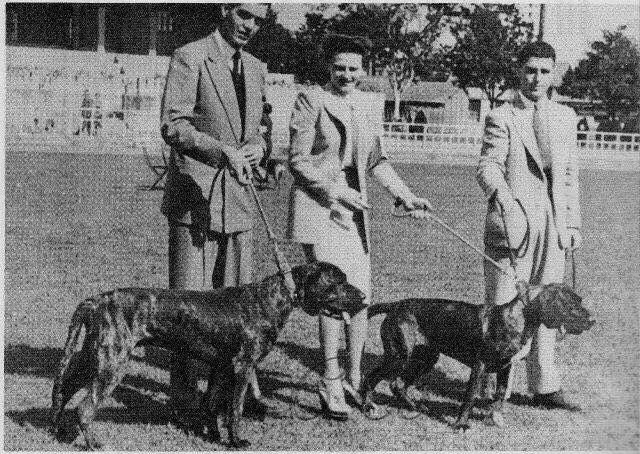
A dog was needed that could guard the property, work alongside people, handle large livestock, follow a trail and make independent decisions when necessary. The Fila’s distinctive build and temperament are the legacy of this versatile work.
A working dog shaped by Brazil
During the colonial period, a variety of European working dogs arrived in Brazil with settlers and along trade routes. They encountered a very different environment from Europe: vast distances, a hot and humid climate, dense vegetation, large estates, free-ranging livestock and dangerous wild animals.
Performance was the main factor determining which dogs survived and were bred from. Dogs were valued for their resilience, strength, stamina, scenting ability and reliability, as well as their close bond with their owners.
The breed was therefore probably not the result of a single deliberate cross. Rather, it was a Brazilian dog type that developed through a long process of selection for function, shaped by the local environment and the work it had to do.

Many tasks, one distinctive character
On Brazil’s traditional farms, a dog that could perform just one task was not enough. The Fila had to fulfil several roles.
The current FCI standard defines the breed as a guard dog, while also noting its natural aptitude for cattle work and big-game hunting. This shows that the Fila’s original versatility remains part of the official description of the breed.
The work demanded more than physical strength. Calmness, stamina, confidence, sound judgement and the ability to make independent decisions were also important. These qualities still define the breed’s true character.
The meaning of the name
The name “fila” is usually associated with the Portuguese verb filar, meaning to catch, seize or hold.
The name may chiefly have referred to the dog’s former work: the Fila’s task was not necessarily to kill an animal, but to stop it and hold it in place until a person arrived.
The name therefore describes a specific working ability rather than uncontrolled aggression: strength, courage, persistence and a dog’s determination to see its task through.
The breed’s origins cannot be reduced to a simple formula
The precise genetic origins of the Fila Brasileiro are still not fully understood. Several theories have been proposed about the dogs that may have contributed to its development.
The best-known theory suggests the influence of the English Mastiff, the Bloodhound and the old English Bulldog. Other theories link the breed to Portuguese and Iberian catch dogs, guard dogs and herding dogs, or to the now-extinct Cão de Fila da Terceira type.
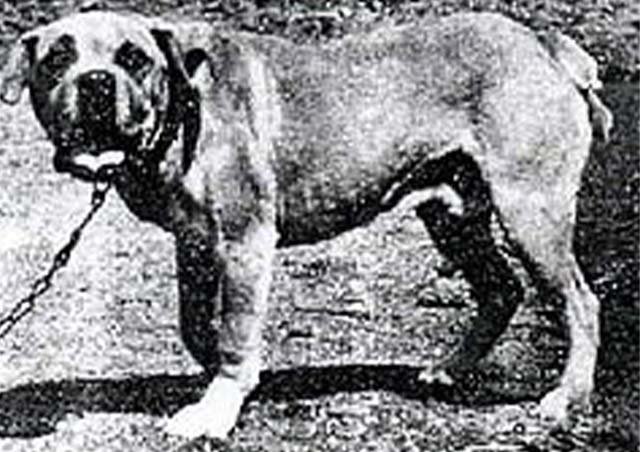
Historical illustration, 1896
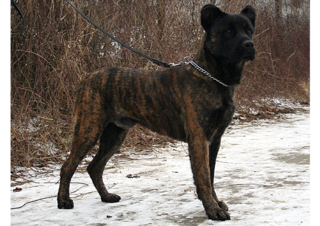
A shared name alone does not prove direct ancestry.
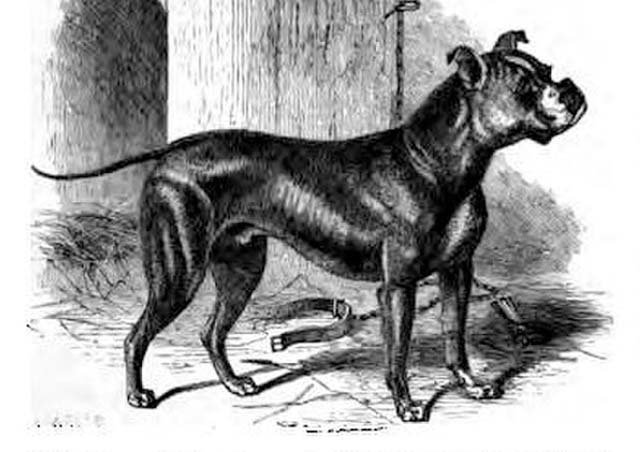
Historical illustration, 1896
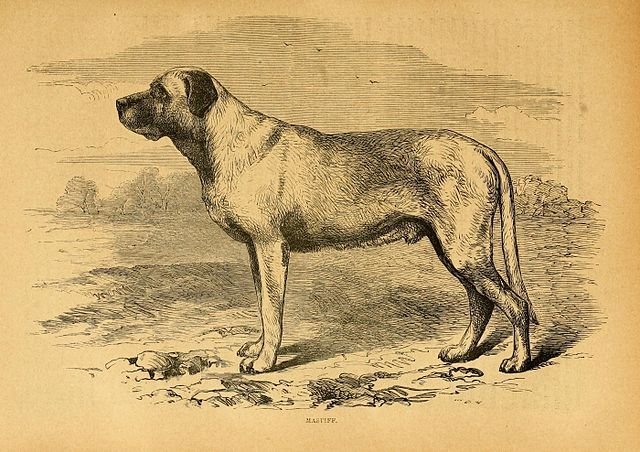
Cassell’s Natural History, 1896
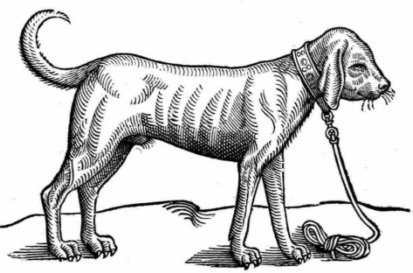
Historical illustration
The difficulty is that no sufficiently detailed breeding records survive from the period in which the breed developed to allow its origins to be reconstructed with certainty. Later theories are largely based on similarities in appearance and behaviour, historical records and breeders’ recollections.
A mitogenomic study published in 2026 suggests that the Fila’s genetic background may be more complex than traditional theories imply. However, it analysed the maternal genetic lineage of just one Fila Brasileiro, so it cannot establish the origins of the breed as a whole. The researchers also call for further studies with larger samples and nuclear DNA analysis.
The most accurate description is therefore that the Fila Brasileiro is a working dog of complex ancestry that developed in Brazil. Several European dog types probably contributed to its ancestry, but their precise proportions and roles cannot currently be established.
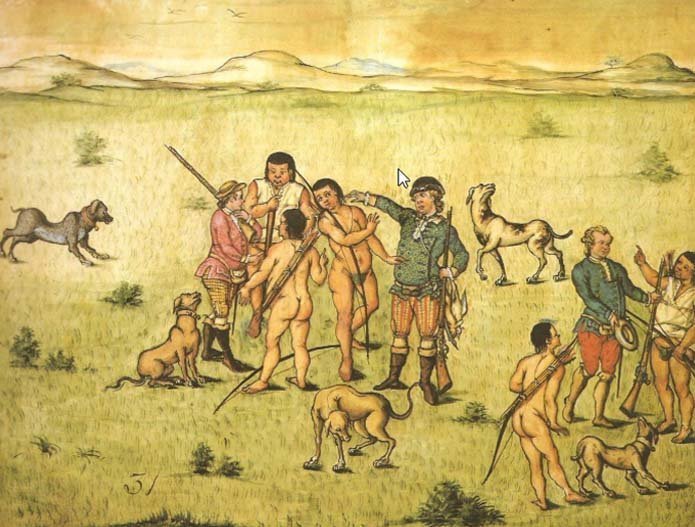
A dark chapter in history
The Fila’s history is also connected with Brazil’s colonial past and the history of slavery. According to some historical sources and later accounts of the breed, dogs of this type were also used to track down and capture enslaved people who had escaped.
This role should neither be concealed nor romanticised. It is part of the breed’s history, but also part of the inhumane system in which these dogs were used.
This historical work may have contributed to the Fila’s excellent scenting ability, persistence and determination. Today, those qualities must take a responsible, manageable form: a stable temperament, sound judgement and close cooperation with the owner.
From working dog to officially recognised breed
Organised breeding of the Fila Brasileiro and its description as a distinct breed began in the first half of the 20th century. The rural working-dog type gradually became a pedigree breed.
Paulo Santos Cruz and several of his contemporaries played a decisive role in this work. The first written breed standard appeared in the 1940s, and work began to document, present and systematically breed this distinctive Brazilian dog type.
Work begins to describe the Fila as a distinct breed, and the first written breed standard is produced.
Paulo Santos Cruz begins breeding Fila Brasileiros at Canil Parnapuan. He later develops the breed’s first standard.
The FCI definitively recognises the Fila Brasileiro, assigning it standard number 225.
A committee is formed in São Paulo that will lay the foundations for CAFIB. In December, the first issue of O Fila is published.
CAFIB publishes the visual standard for the Fila Puro, followed by a new written standard, and continues its work as an independent club.
The FCI publishes the revised version of standard 225 that is currently in force.
The founding and role of CAFIB
By the 1970s, serious debate had developed over the direction of the breed’s development. Some breeders were concerned about suspected crosses with other breeds and the growing prominence of striking-looking dogs that were moving away from the traditional type.
In response, the Clube de Aprimoramento do Fila Brasileiro, or CAFIB, was founded on 19 March 1978. Paulo Santos Cruz was among its founders. The organisation aimed to preserve the pure, functional Fila and to eliminate traits foreign to the breed.
CAFIB developed its own standard and assessment system. Its phenotypic evaluations consider not only overall impression, but also type, conformation, movement and temperament. The organisation has operated for more than four decades in Brazil and other countries, making it a significant presence in both the Fila’s history and its breeding today.
CAFIB and the CBKC–FCI system do not take the same approach on every issue. A detailed comparison of the two deserves a separate article.
Official CAFIB website ↗What does preserving the breed mean today?
Preserving the Fila Brasileiro cannot mean simply maintaining an impressive outward appearance. The breed’s original value lies in the unity of its conformation, movement, temperament, working ability and bond with people.
A functional Fila is more than a large, strong dog. It is agile, enduring and confident, responds well to its surroundings, and can distinguish everyday situations from genuine danger.
One of the most important tasks of modern breeding is therefore to preserve the breed’s historical character while also considering health, a stable temperament, manageability and the demands of today’s social environment.