
Boda Katalin · Braganza do Hungaro
About
Since I was very young, I’ve had a close bond with animals, especially dogs. It must be in my genes: I was already drawing horses and dogs as a small child. When my parents asked me at the age of six what I wanted to be when I grew up, I said: a dog breeder.
Growing up with dogs
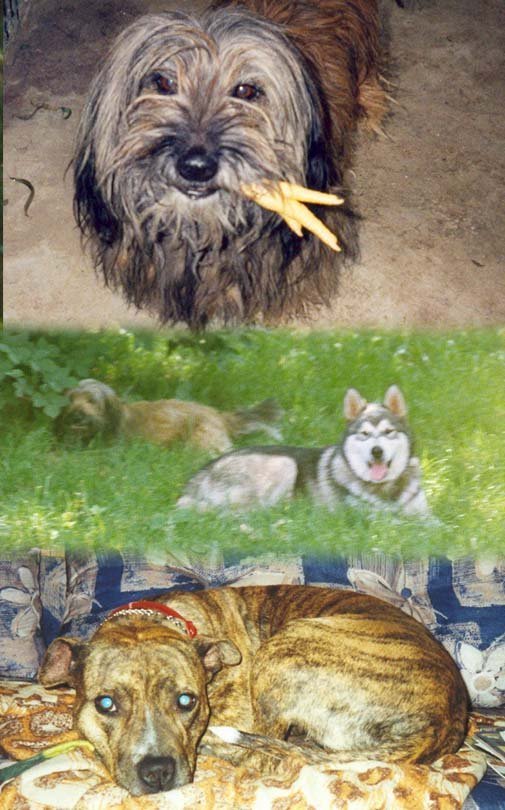
I got my first dog from a neighbour when I was five. He was a wonderful Dachshund–Puli cross. We grew up together, and he opened the door to a world that would hold me spellbound for the rest of my life.
As a teenager, I saved up for my second dog. My first pedigree dog was an Alaskan Malamute puppy. I went to my first dog show in 1996: the World Dog Show in Budapest, where we saw my dog’s mother.
Sadly, we were not given much time together. He had not yet turned three when he crossed the Rainbow Bridge.
A year later, a good friend gave me Piti, an American Staffordshire Terrier female who was just a few months old. She showed me a whole new side of canine character. She was quick to learn and so obedient that I did not even need to take a lead on our walks. The breed had a very poor reputation at the time, yet she adored strangers. Too much, in fact. She was no guard dog, and I was looking for something different.
Discovering the Fila Brasileiro
I wanted a good guard dog: one deeply devoted to its family, but distrustful of strangers. That is how I came to choose the Fila Brasileiro.
The breed was not entirely new to me. Through my dog books and magazines, I already knew hundreds of breeds. I met my first Fila in 1996, when I was thirteen. I will never forget that encounter.
The son of the corner shopkeeper boasted that his father had recently bought a Fila, and that it had taken him half a day and a slab of bacon to win her over. She was a beautiful brindle female who guarded the shop for years. My friend and I often went there.
I never dared to stroke her. Having already spent time around dogs, I could see that if she decided to bite, I might not be quick enough to pull my hand away.
I saw my second Fila at a dog show in 1999. She was tied to a post on her own and barked constantly. The next decisive encounter was the 2002 Molosser Club Show, which finally confirmed that this was the kind of dog I wanted.
It began with Tor
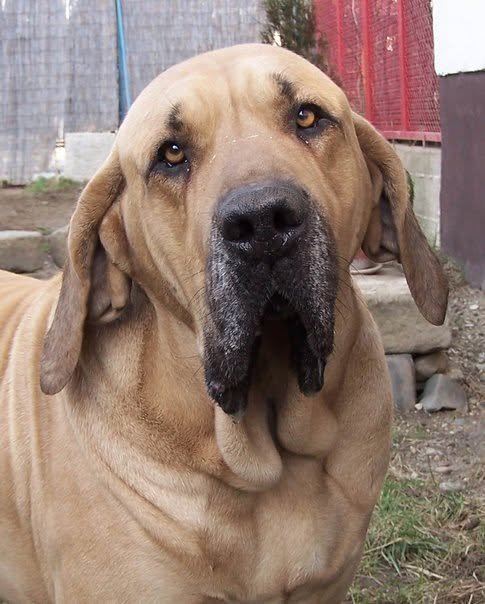
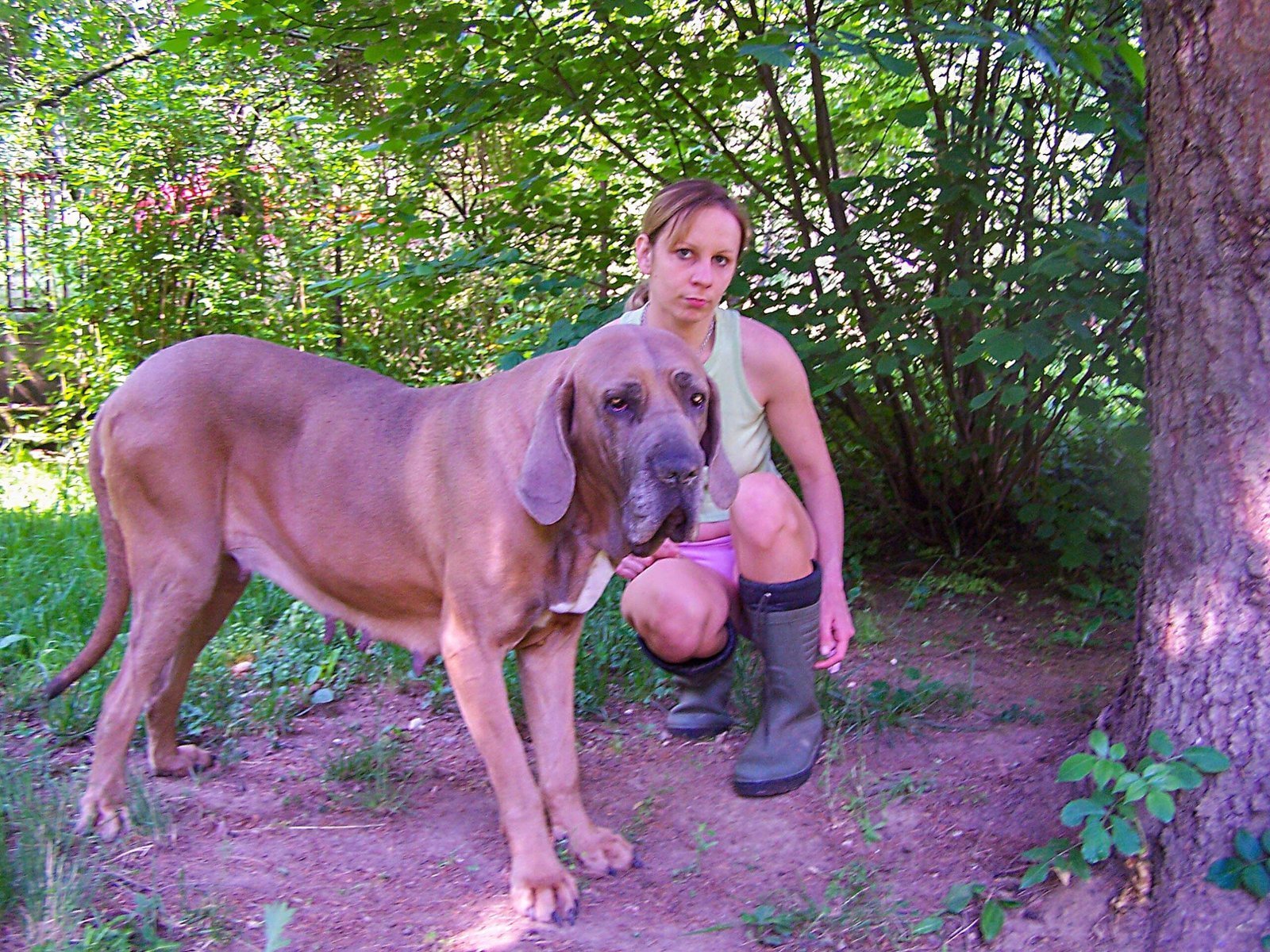
Tor, a fawn Fila male, came to me in 2003. He introduced me to the world of dog shows, and with him I began to learn about the breed in earnest.
In 2004, he was one of the most successful dogs of his breed. He also left his mark as a stud dog: his name can still be found in the ancestry of some Filas today.
When he was older, we moved to a quieter, less crowded place on the edge of a forest. That was when he truly showed me the Fila temperament. I am prouder of that than of all his show results.
He showed me that there is so much more to these dogs than we see in everyday life.
Tor also gained a friend: Bubu, a male Wirehaired Dachshund. Later, a mate joined us. I established Braganza do Hungaro in 2005, and our first litter was born that same year.
Sita and Braganza do Hungaro
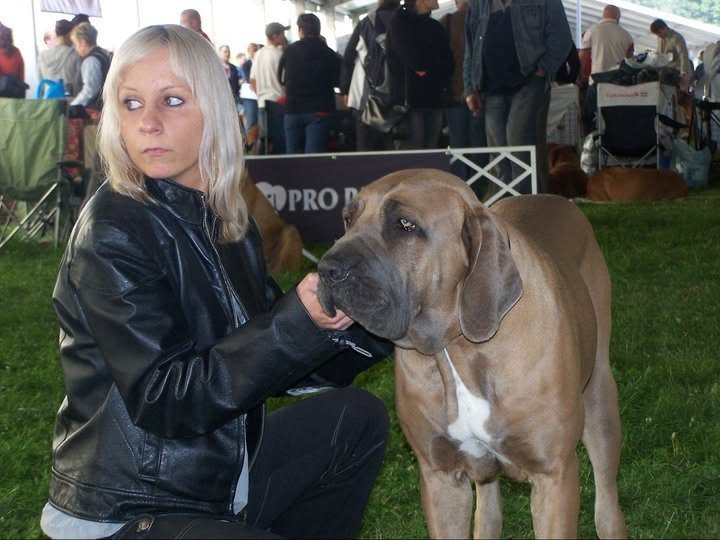
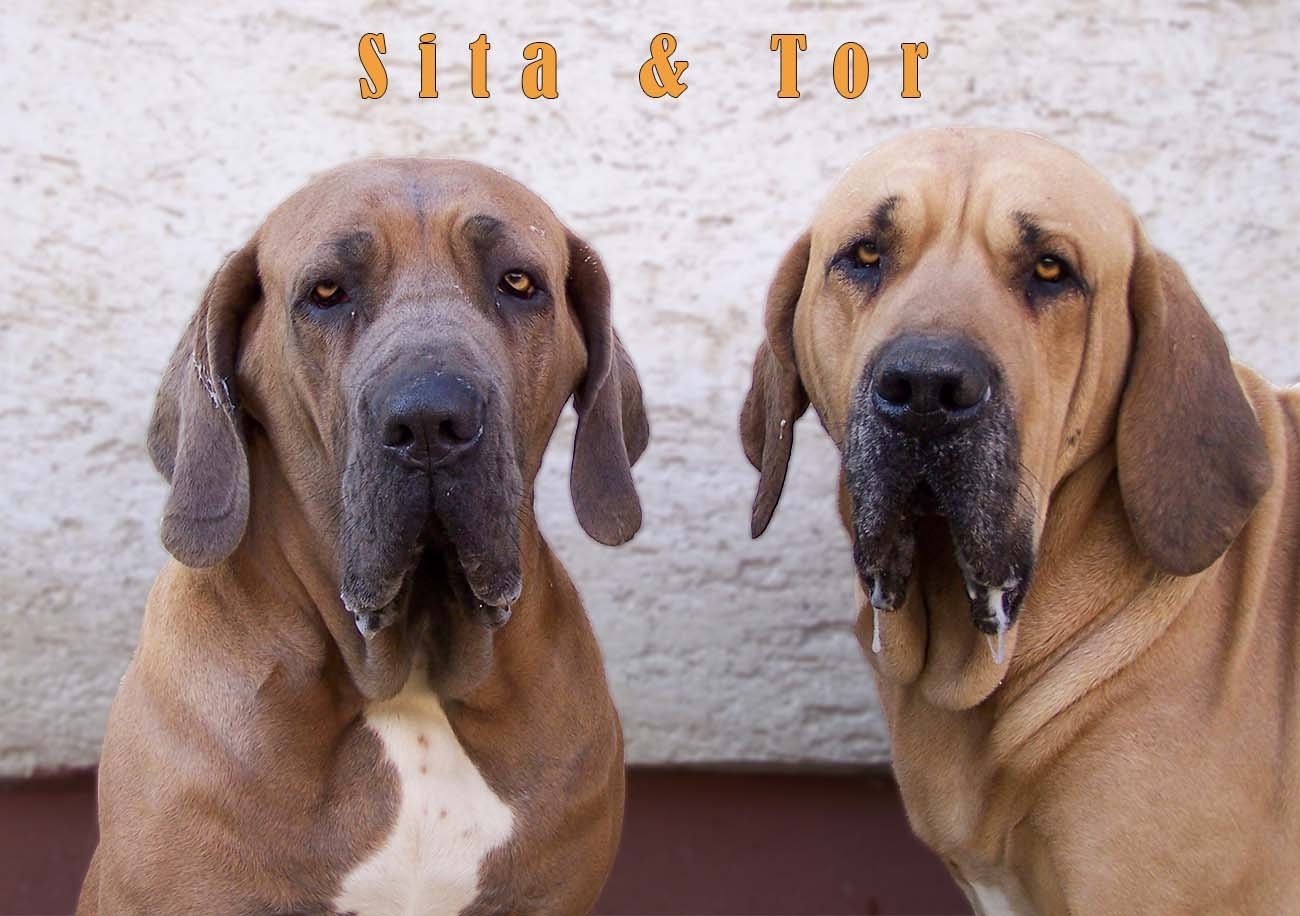
In the spring of 2006, I imported Sita, a female from Serbia whose parents were Brazilian dogs of CAFIB bloodlines. To my knowledge, she was the first Fila of this ancestry in Hungary. Her parents, living in Serbia, were also exceptional in those years.
Sita’s colour was as unusual as her ancestry. Her dark brown base colour had a subtle greyish sheen, known as cinza vinegar. Among horse breeds, the Akhal-Teke can have a similar colour effect, particularly striking as the light changes.
Both Sita’s appearance and her mental steadiness became a guide for me. By the age of three, she had grown into a beautiful, large female, and on several occasions people overseas wanted to buy her.
I made several attempts to breed her. We travelled thousands of kilometres to Xingu II da Serra de Itanhandu, a male whose bloodlines suited hers, but that pairing produced no litter.
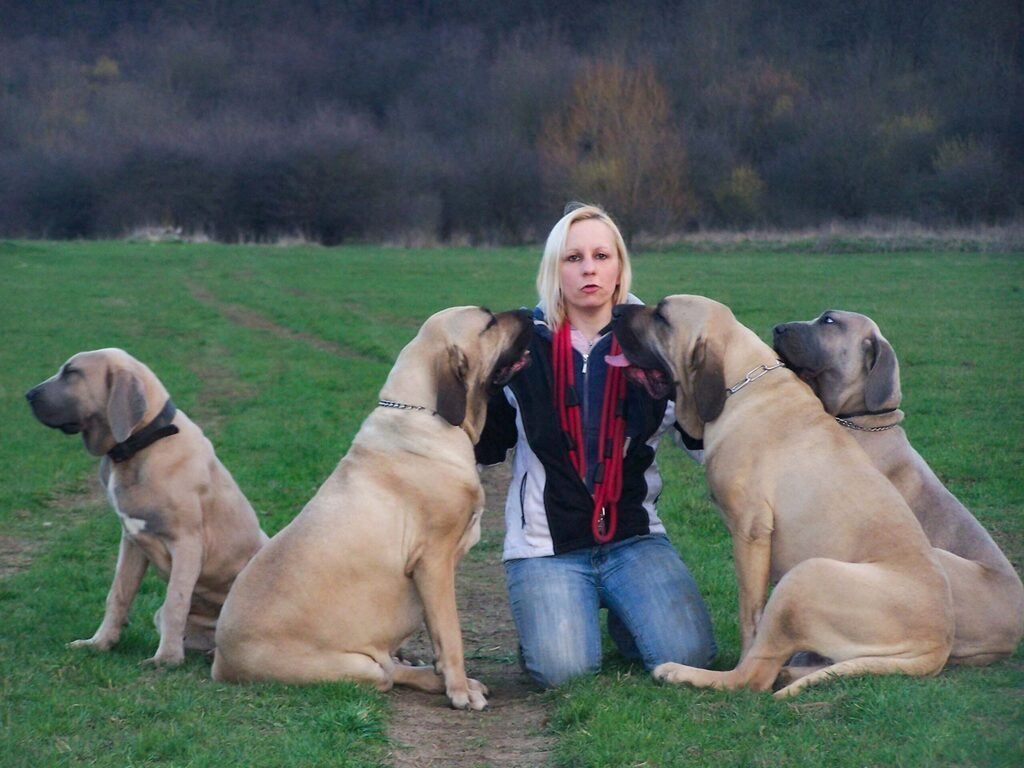
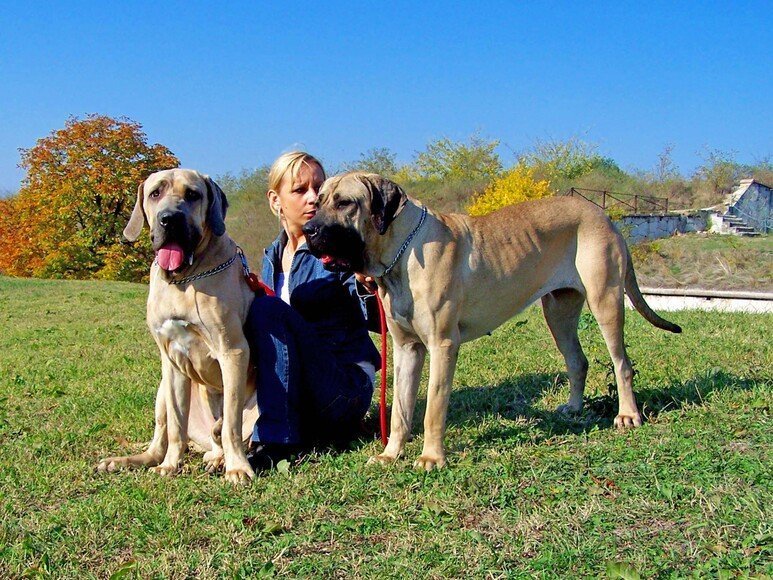
Sita’s first litter was eventually sired by Tor, and her next by Gaucho II da Serra de Itanhandu. I kept puppies from both litters. To my friends and colleagues, I became the “crazy dog girl”, with a wild, big-eared beast always riding in her car to look after her.
I spent a great deal of time with them, and each had a distinct personality. Nothing taught me more than observing Fila behaviour within a pack and in different situations in life.
What did breeding mean to me?
Did I become a dog breeder when I grew up? My qualifications would allow me to call myself one, but I would rather say that I experienced something of that world.
The Fila Brasileiro population in Hungary is very small. Even someone who breeds a single litter can therefore have a significant influence on the breed’s development here.
I learnt an enormous amount from my dogs. Life with them was full of adventures that people outside the dog world might find hard to imagine. Some people helped me along the way, and I owe a particular debt to my family. Others looked at me with incomprehension, or even contempt.
Some people cannot understand the place in modern society of a dog that instinctively rejects a stranger’s approach. They often question not only the dog, but also the owner’s choice and motivations.
Those unfamiliar with guarding breeds may find it difficult to understand the value of a good guard dog. Yet the Fila’s true value lies not in uncontrolled aggression, but in the particular unity of breed type, health, a stable nervous system and breed-typical temperament.
Preserving all these qualities together is a serious challenge. It requires difficult decisions, looking beyond our own fences, and considering the breed in a global context as well as a local one. My aim was always to breed healthy, stable dogs that came as close as possible to the standard.
Attempts to begin again
In 2018, I tried another pairing in an effort to preserve my bloodline, but Caramburu and Java de Boa Sorte produced no puppies.
That same year, in an unexpected turn of events, Dandara, a female born at my kennel, came back to me. I made two more attempts to start again with her, once more travelling thousands of kilometres, but neither succeeded.
In the end, I felt that perhaps it was meant to be this way. I had tried everything.
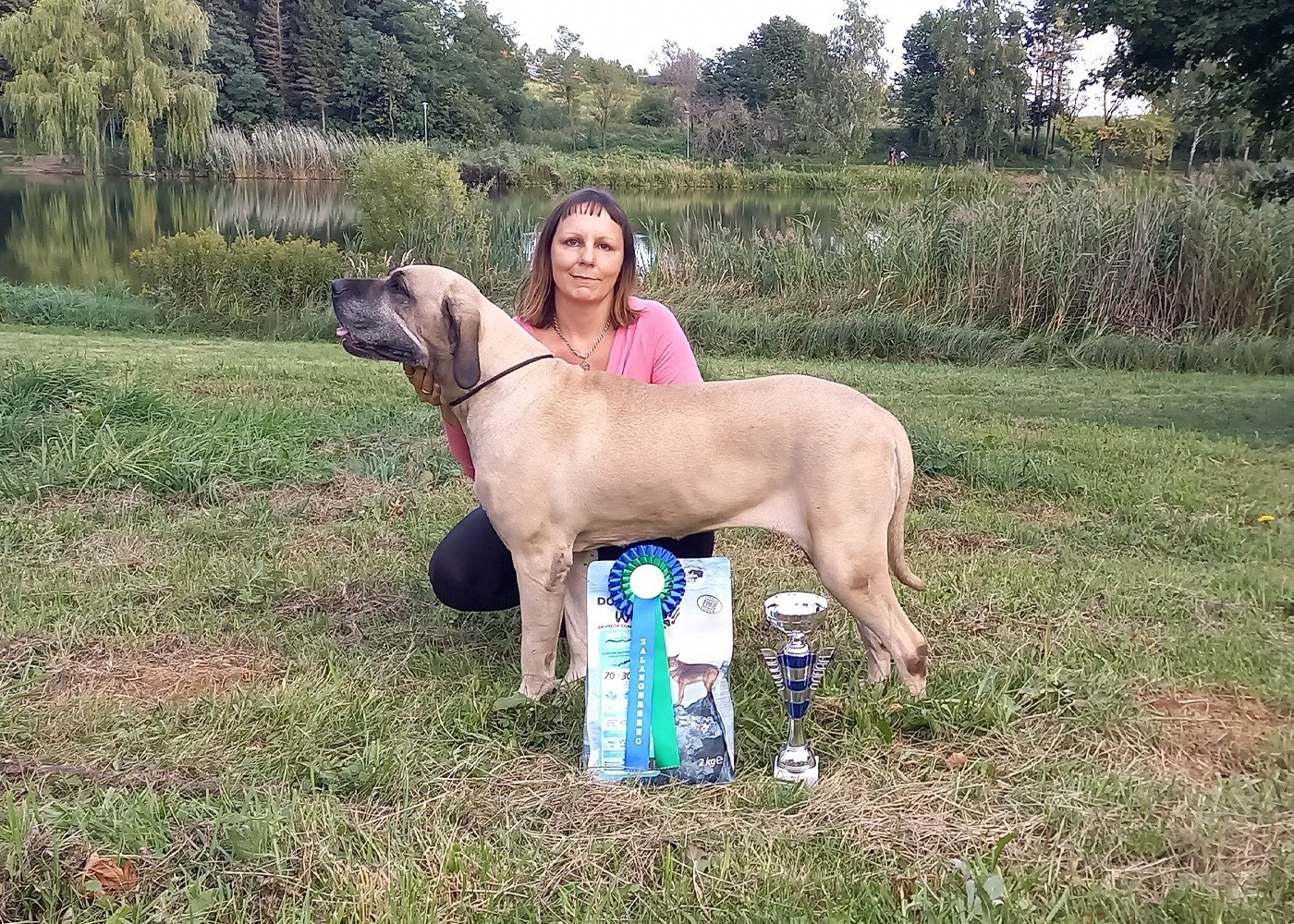
Even so, Dandara’s return gave us six more years together. She became extraordinarily attached to me, although she was already five when she came home. I lost her in the spring of 2024, and with her an important chapter in the story of Braganza do Hungaro came to an end.
What does the Fila mean to me?
You should never judge a Fila Brasileiro on first impressions alone. Yet a dog show largely depends on just such a brief impression, which can easily be misleading with a breed as complex as this one.
As a Fila owner, I believe it is important to respect the breed’s nature. I do not want to reshape it, or impose expectations that are foreign to it. We need to create conditions in which it can live safely, while remaining true to its own nature.
I have always tried to show people outside the breed that its character is precisely where its beauty lies. In a world that expects every dog to be open and unconditionally friendly, there is still a place for this distinctive, reserved dog — with responsible ownership, consistent handling and proper control, of course.
After more than twenty years, I still love the breed. I continue to follow the Fila Brasileiro ideal described by Dr. Paulo Santos Cruz, “the father of the breed”: that remarkable dog which is also known in Brazil as “Mother Nature’s Gift”.
 Boda Katalin