
The Fila Brasileiro can be impressive at first sight. Its powerful presence, courage, deep attachment to its family and natural guarding instinct make it a truly distinctive breed.
That does not mean it is the right choice for everyone.
It is not enough to admire the Fila for being beautiful, strong or loyal. You also have to accept that it is an independently minded, powerful dog that may be naturally reserved toward strangers. Living with one requires foresight, consistency and serious responsibility.
After more than twenty years with Filas and raising four litters, I have found that the breed shows its best qualities when the owner does not only love it, but also understands its nature.
Before choosing a Fila Brasileiro, it is worth answering the following questions honestly.
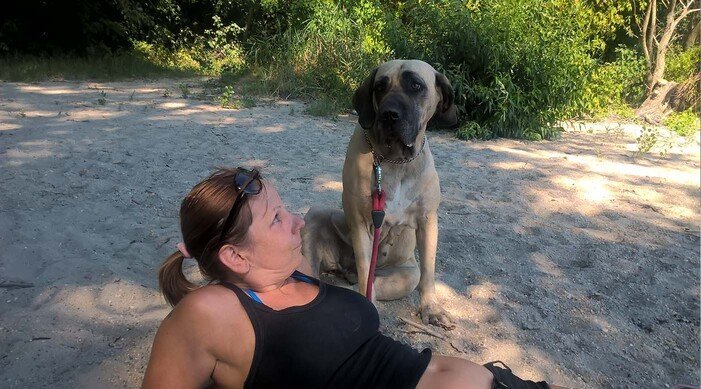
1. Why do I want a Fila?
This is the first and perhaps the most important question.
It is not a good starting point if you are attracted mainly by the Fila’s imposing appearance, physical power or distrust of strangers. The breed is not a status symbol and should not be chosen to frighten people.
The Fila’s greatest value is not that it can look dangerous. What makes the breed special is the combination of deep attachment to its family, sensitivity, courage and independent judgement.
Ask yourself whether you truly want this complex character, or whether what you mainly want is an impressive, powerful guard dog.
Those are not the same thing.
2. Can I accept that my dog may not like everyone?
A Fila does not necessarily seek the company of unfamiliar people. It may not appreciate strangers approaching, trying to pet it or entering the property it considers part of its territory.
This is not automatically a training failure. It can be part of the breed’s fundamental nature.
Good socialisation does not mean trying to turn a Fila into a dog that is friendly with everyone. The goal is for the dog to remain confident, predictable and manageable in different situations.
If it is important to you that anyone can pet your dog, take it from you easily, or be enthusiastically welcomed as a visitor, then the Fila is probably not the right breed for you.
3. Can I guide the dog calmly and consistently?
A Fila does not need a harsh owner. It needs a predictable one.
Physical force, shouting or constant displays of dominance do not make the dog more reliable. They can damage the relationship, create insecurity and lead to dangerous situations.
Rules should be established in puppyhood and then applied consistently. What you allow a ten-kilogram puppy to do can become a problem when that puppy grows into a very powerful adult.
The owner needs to set boundaries without destroying trust. That requires patience, self-control and consistency.
4. Can the dog truly be part of the family?
The Fila bonds strongly with its own people. It does not simply guard territory; above all, it attaches itself to the family.
A large garden alone is not enough.
If the dog spends most of the day at the far end of the garden or isolated in a kennel with little family contact, its emotional needs are not being met. Isolation can also contribute to behavioural problems.
A Fila needs to take part in everyday life. It should be able to see, hear and follow its family, share experiences with them, and receive attention for more than just feeding or guarding.
Before choosing a Fila, ask whether there is truly a place for one in your life, not only in your garden.
5. Can I provide a safely managed environment?
Living with a Fila requires reliable fencing, securely closing gates and a well-planned daily routine.
It is not enough to trust that the dog “will not go out” or will always obey. A gate left open, a delivery driver entering or an unexpected visitor can create a dangerous situation in seconds.
Every member of the household needs to understand the rules. They should know when and how a gate can be opened, where the dog is at that moment, and what the procedure is when a stranger arrives.
Safety is not distrust of the dog. It is part of responsible ownership.
6. Am I prepared for visitors?
Visitors also need to be managed when you live with a Fila.
You should not assume that because you like a visitor, the dog will automatically accept that person too. A Fila is not obliged to make friends with guests and should not be forced into situations that make it uncomfortable.
In many cases the safest solution is calm, appropriate separation. That requires a place where the dog can remain secure and relaxed.
It is also worth considering how often visitors, tradespeople, delivery drivers or children come to your home. In a constantly open household, maintaining good control can be considerably more difficult.
7. Do I understand what appropriate socialisation means for a Fila?
Socialisation does not mean that every person should pet the puppy.
The goal is to expose the puppy safely to different people, places, sounds, surfaces and everyday situations. It should learn how to travel in a car, walk on a lead, cope in unfamiliar environments and tolerate veterinary handling while still being able to pay attention to its owner.
A well-socialised Fila can still be reserved toward strangers. Socialisation does not erase genetic traits; it helps them appear in a more manageable and predictable way.
This requires judgement as well as time. Too many poorly chosen or forced encounters can have the opposite effect.
8. Can I physically and practically handle the dog?
An adult Fila has considerable physical strength. Polite lead walking should not begin only when the dog has already become difficult to hold.
From puppyhood, it is worth teaching:
- calm walking on a lead;
- self-control at doors and gates;
- staying in place;
- a reliable release or interruption cue;
- calm car travel;
- acceptance of veterinary examination;
- positive muzzle training.
A muzzle is not a sign of failed training. With a large, powerful dog that may be reserved toward strangers, it can be an important safety tool.
You should also think ahead about who could care for and handle the dog if you became ill, were injured or had to travel for several days.
9. Am I prepared for the time and financial commitment?
Keeping a large dog can be expensive. High-quality food, veterinary care, health testing, equipment, secure fencing and travel can all represent significant costs.
Time is just as important.
A Fila needs shared life, training, exercise and regular contact with its owner. It is not enough simply to let the dog into the garden and expect it to occupy itself.
Owning a dog is a commitment for many years. It is worth considering not only whether a Fila fits into your life now, but what will happen if your work, home, relationship or health changes.
10. Will I still take responsibility if my life changes?
Rehoming a Fila can be particularly difficult.
The breed forms deep attachments, and its reserve toward strangers can make adapting to a new family difficult. The older the dog is, the harder it may be to lose familiar people and surroundings.
Of course, unexpected events happen. Even so, it is important to think ahead. What happens to the dog in the event of a move, divorce, long-term illness or financial difficulty? Is there a family member the dog knows and accepts? Could safe care be arranged?
A responsible decision is not only about the day you bring a puppy home. It is about the dog’s entire life.
The honest answer matters most
These questions are not intended to discourage anyone from the breed.
With the right owner, a Fila can be a deeply devoted, sensitive and dignified companion. It can form an exceptional bond with the person it trusts and considers part of its family.
But love for the breed is not enough. You have to accept its nature and provide a life in which it can live safely and in balance.
If you cannot yet answer every question with a confident yes, that does not necessarily mean you should never have a Fila. It may simply mean that the right time has not arrived yet.
An honest “not yet” is always a better decision than a careless “yes”.